
Commercial vs. Residential HVAC: Understanding the Differences
While both systems cool your space, commercial HVAC has different requirements than home units. Learn what makes commercial systems unique in Phoenix.
Commercial vs. Residential HVAC: Understanding the Differences
In the blazing heat of the Phoenix Valley, whether you are managing a busy office in Tempe or relaxing in your living room in Gilbert, cool air is a non-negotiable necessity. To the average person, an air conditioner is just a box that makes cold air. You set the thermostat, and the temperature drops.
However, from a technical standpoint, commercial HVAC and residential HVAC systems are beasts of very different natures. While the underlying physics of refrigeration remains the same, the design, complexity, and maintenance needs vary significantly. Understanding these system differences is crucial for business owners and homeowners alike to ensure they are getting the right performance and longevity out of their investments.
Location and Placement
One of the most obvious differences you will spot while driving through Scottsdale or Mesa is where the equipment is located.
Residential: The Split System
Most homes use a “split system.” This means the components are separated. The compressor and condenser sit outside on a concrete pad (usually in the side yard), while the evaporator coil and furnace are located inside, typically in the attic, closet, or garage. This setup works best for the spatial constraints of a standard home.
Commercial: The Packaged Unit
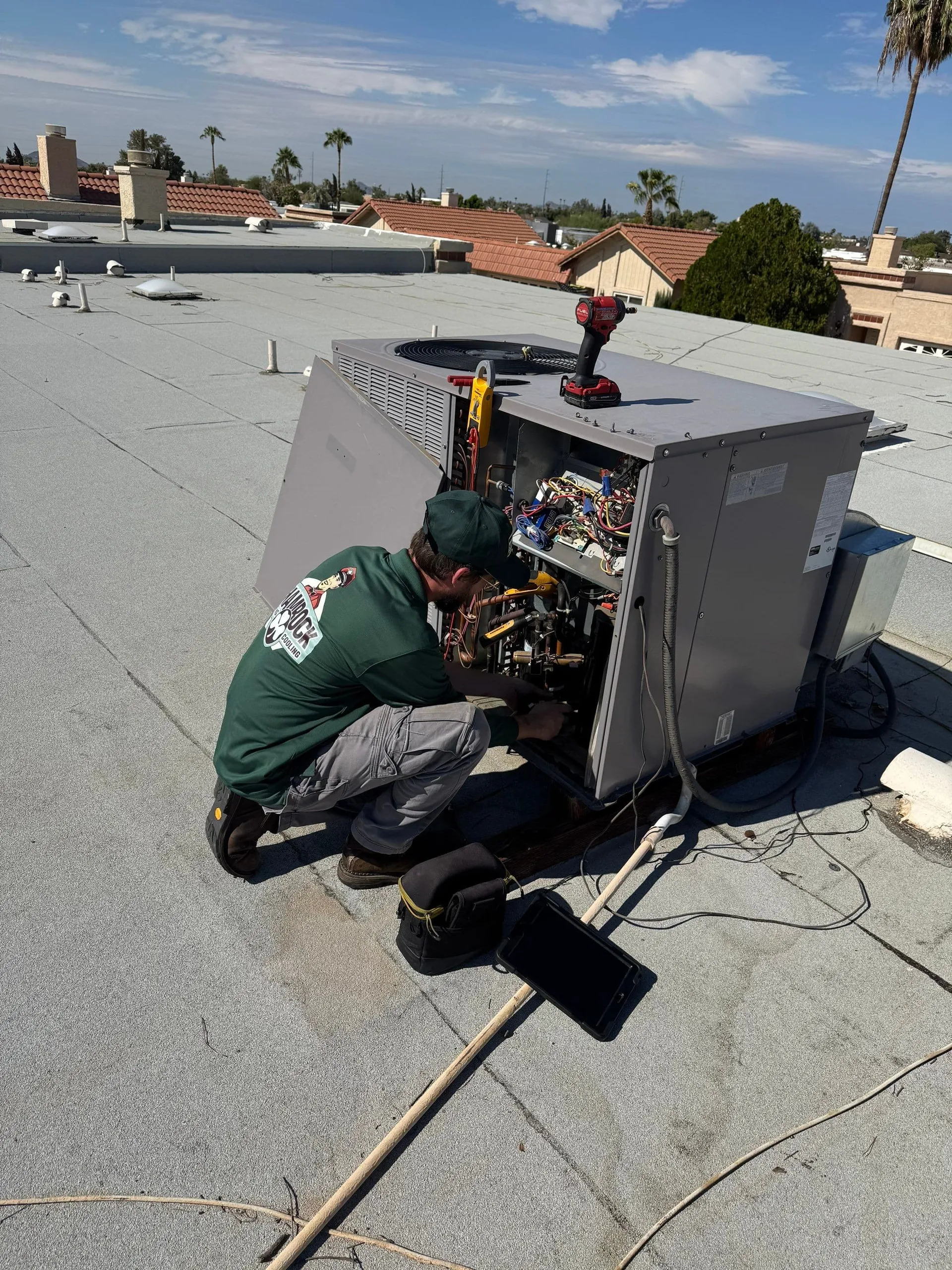
Commercial buildings, from strip malls to office complexes, typically use packaged units. You will often see these large rectangular boxes sitting on the roof. In a packaged system, both the heating and cooling components are housed in a single cabinet. Placing them on the roof saves valuable ground space for parking or landscaping and reduces noise pollution for the workers inside.
Complexity and Modularity
The demands placed on a commercial system are generally much higher than those on a home unit.
Modularity
Commercial units are designed to be modular. As a business grows or rearranges its floor plan, the HVAC system often needs to be expanded. Commercial systems allow technicians to add or remove “modules” to adjust heating and cooling capacity without replacing the entire system. Residential units are standalone; if you add a room to your house, you might need to upgrade the whole unit or add a Ductless Mini-Split.
Zoning and Controls
While some modern homes have zoning (different temperatures for upstairs and downstairs), it is standard in commercial buildings. A single commercial system might need to cool a server room to 65°F while keeping the reception area at 74°F. This requires complex dampers, sensors, and bypass ducts that are rarely found in residential applications.
Drainage and Ventilation
In a dry climate like Phoenix, humidity isn’t always our top concern, but drainage is critical for preventing water damage.
- Residential Drainage: A home AC unit drains condensate through a simple PVC pipe, usually leading outside.
- Commercial Drainage: Because commercial units are larger and often on the roof, they produce significantly more water. They require intricate piping systems to ensure water drains properly into the building’s wastewater system rather than pooling on the roof, which could cause leaks or structural damage.
Ventilation and Economizers
Commercial buildings are often tightly sealed and occupied by many people, requiring active ventilation to meet building codes. Commercial units often feature “economizers.” These devices measure the outdoor air temperature and humidity. If the air outside is cool (like on a pleasant February morning in Chandler), the economizer opens a damper to bring in fresh outdoor air to cool the building, saving energy by not running the compressor. Residential units typically do not have this feature.
Maintenance Requirements
Because of their size and complexity, commercial systems require a different approach to maintenance.
A residential system typically needs a check-up twice a year—once for the AC Tune-up in spring and once for the Heating Tune-up in fall.
Commercial systems, however, often run year-round and carry a much heavier load. They may require quarterly inspections to check belts, lubricate bearings, and ensure the economizers are functioning correctly. Neglecting a commercial unit can lead to business disruptions, which costs money not just in repairs, but in lost productivity.
Common Mistakes to Avoid
- Assuming One Size Fits All: You cannot simply install a large residential unit on a small commercial building and expect it to meet code requirements for ventilation.
- Ignoring the Lease: If you lease a commercial space, clarify who is responsible for HVAC repairs. In “Triple Net” leases, the tenant is often responsible for the maintenance and repair of the rooftop unit.
- DIY Repairs: While a homeowner might change their own filter, commercial systems involve high-voltage electrical connections and complex refrigerant loops. Attempting DIY repairs on a commercial unit is dangerous and can void warranties.
How Shamrock Can Help
At Shamrock Heating & Cooling, we pride ourselves on being experts in the thermodynamics of the desert. Whether you need a new installation for a custom home or reliable service for your business’s climate control, we have the experience to handle the job.
We understand the nuances of:
- Sizing: Ensuring your system is powerful enough to handle July heat without being so big that it short-cycles.
- Efficiency: Recommending modern heat pumps and A2L refrigerant systems that lower your operating costs.
- Reliability: Providing prompt AC repair so you—or your customers—never have to sweat it out.
If you are unsure about the state of your current system or need a second opinion on a replacement, our team is ready to assist. Check out our deals and financing to see how we can make your upgrade more affordable.
Schedule your HVAC service today to keep your system running smoothly year-round.
Need HVAC Help? We’re Here to Help.
Schedule service with Shamrock Heating & Cooling for fast, reliable comfort.
Schedule Service