
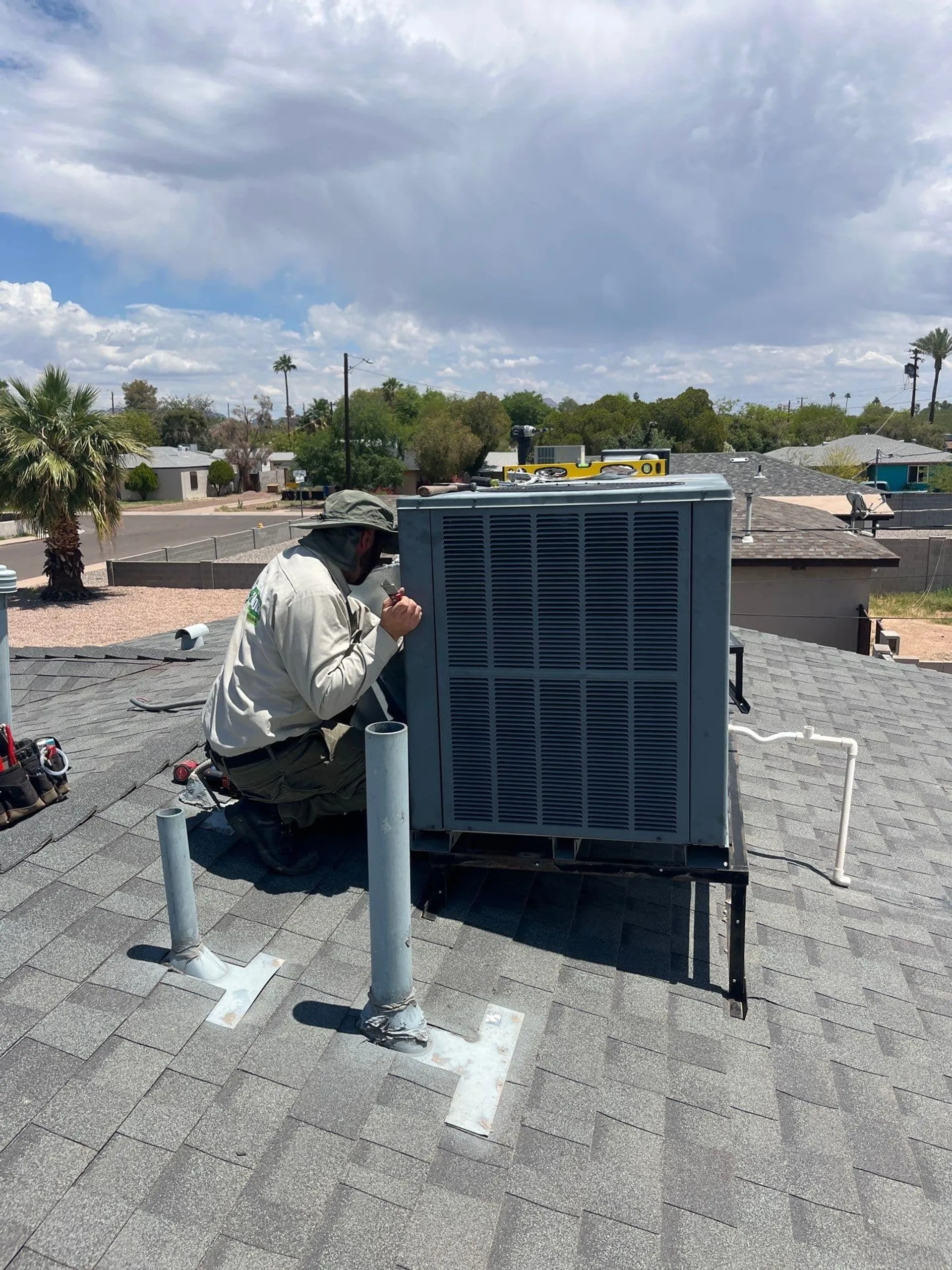
Condensate Pump Problems: When Your HVAC Won't Drain
A failed condensate pump can lead to water damage and sudden system shutdowns. Learn how these pumps work, signs of failure, and how to prevent drainage problems in your Phoenix home.
Condensate Pump Problems: When Your HVAC Won’t Drain
In the scorching heat of the Phoenix Valley, your air conditioner works overtime to keep your home cool. As it removes heat from the air, it also removes humidity. While our desert air is generally dry, an AC unit can still produce gallons of water (condensate) every day during the monsoon season or periods of higher humidity.
Usually, this water drains away via gravity through a PVC pipe. However, if your HVAC unit is located in a basement, a garage, or an attic where gravity flow isn’t possible, your system relies on a condensate pump to push that water out. When this small but mighty component fails, you might face drainage problems ranging from messy leaks to a complete system shutdown.
What Is a Condensate Pump?
A condensate pump is a small, motorized device typically installed right next to your indoor furnace or air handler. Its job is simple but critical: to collect the water dripping from your AC’s evaporator coil and pump it up and out of your home.
The pump has a small reservoir tank. As water fills the tank, a float rises. When the float reaches a certain level, it triggers a switch that turns on the motor, pumping the water out through a flexible vinyl tube to a drain, sink, or outside location.
Signs Your Condensate Pump Has Failed
Because these pumps are often tucked away in attics, closets, or basements, homeowners rarely think about them until something goes wrong. Here are the most common signs of pump failure:
1. Water Pooling Around the Unit
If you see a puddle of water forming around your furnace or air handler, it’s a red flag. This usually means the pump isn’t moving water fast enough, or it has stopped working entirely, causing the reservoir to overflow.
2. The AC Won’t Turn On
Most modern condensate pumps are equipped with a safety overflow switch. If the pump fails and the water level gets too high, this switch cuts the 24-volt power to your thermostat to prevent flooding. If your thermostat screen is blank or the system refuses to start, a full condensate pump might be the culprit.
3. Strange Noises
A functioning pump emits a low hum when it runs. If you hear loud gurgling, grinding, or a continuous buzzing sound without the water level going down, the motor may be seized or struggling against a clog.
Why Do Pumps Fail?
In Phoenix, drainage problems are often caused by environmental factors.
- Algae and Sludge: Even in dry climates, the wet environment inside the drain line is a breeding ground for algae and bacterial slime. This “gunk” can clog the pump’s intake or cause the float mechanism to get stuck in the “up” or “down” position.
- Debris: Dust and insulation particles can wash into the pump reservoir, jamming the impeller.
- Electrical Burnout: Like any motor, the pump has a finite lifespan. After years of service, the motor may simply burn out.
- Kinked Discharge Line: If the vinyl tubing leading away from the pump gets pinched or blocked, the pump works against too much pressure and eventually fails.
Troubleshooting and Prevention
While some issues require a pro, there are a few things you can check if you suspect condensate pump problems.
Check the Power
Ensure the pump is plugged into a working outlet. Sometimes a tripped GFI outlet in a garage or basement is the only reason the pump isn’t running.
Clean the Reservoir
If you feel comfortable doing so, you can unplug the pump and remove the top housing. Clean out any visible sludge or debris from the tank. A mixture of water and vinegar can help kill algae buildup.
Check the Float
Gently lift the float switch. You should hear a click, and the motor should engage. If the float feels sticky or doesn’t move freely, it needs to be cleaned or the pump needs replacement.
How Shamrock Can Help
Dealing with water around high-voltage electrical equipment can be dangerous. If your pump is overflowing or your AC has shut down, it is best to call in the experts.
At Shamrock Heating & Cooling, we help homeowners across the Valley—from Tempe to Chandler and Scottsdale to Mesa—keep their homes dry and cool. We can handle:
- Pump Replacement: We install high-quality, reliable pumps with safety switches to protect your home.
- Drain Line Cleaning: During a standard AC Tune-up, we can flush your drain lines to prevent algae buildup.
- Safety Upgrades: We can install additional safety float switches (ceiling savers) to ensure you never come home to water damage.
Don’t let a small plastic box compromise your comfort or your flooring. We are here to ensure your system drains properly so you can relax.
Call us for professional HVAC solutions tailored to your home.
Need HVAC Help? We’re Here to Help.
Schedule service with Shamrock Heating & Cooling for fast, reliable comfort.
Schedule Service