
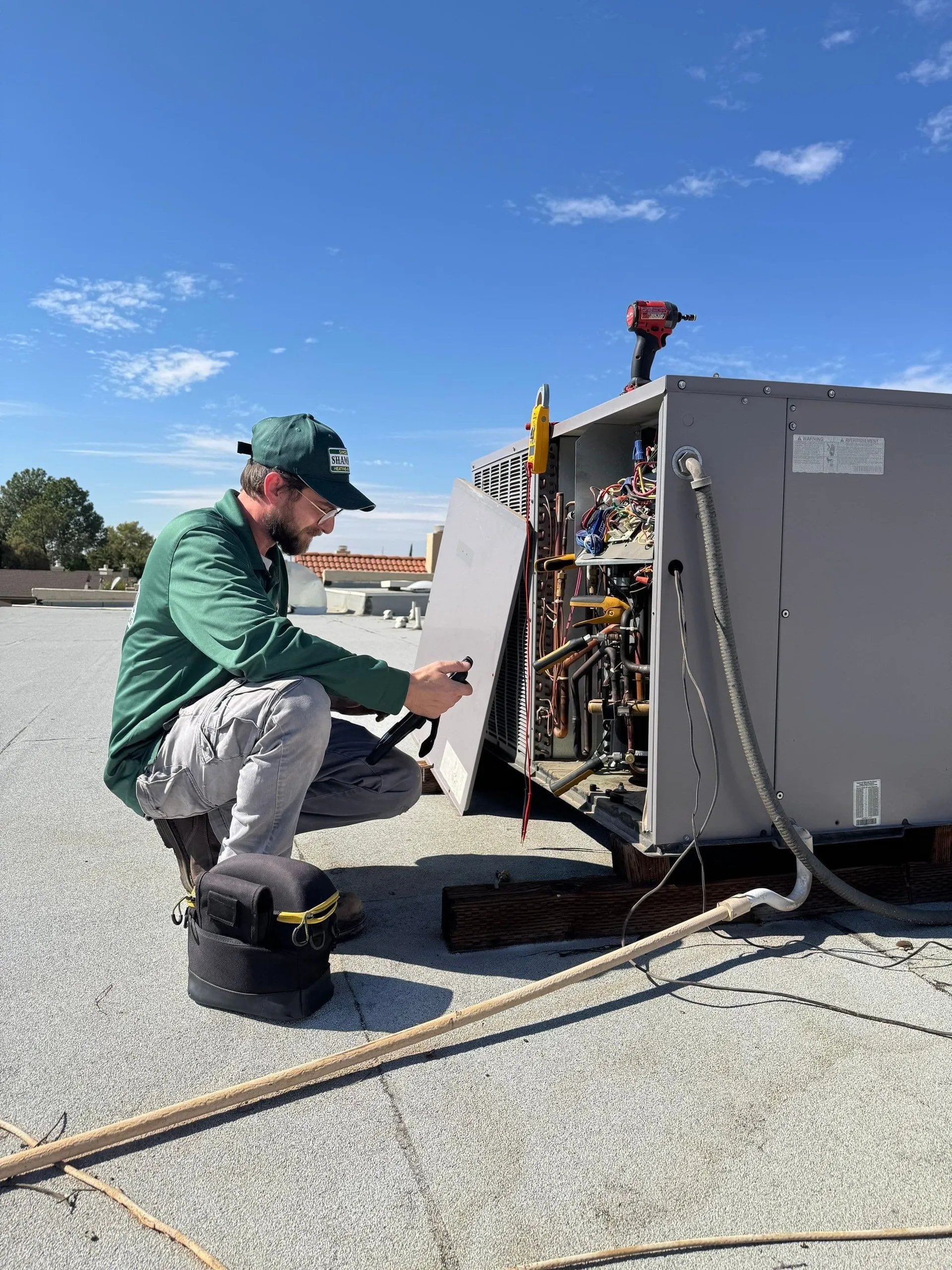
How Arizona's Intense Sun Affects Your HVAC System
Extreme UV exposure and heat impact outdoor units. Discover protection strategies for your HVAC equipment against direct sunlight in the Phoenix Valley.
How Arizona’s Intense Sun Affects Your HVAC System
Living in the Phoenix Valley means enjoying over 300 days of sunshine a year. While this is great for poolside weekends and golf trips in Scottsdale, it poses a significant challenge for the mechanical systems that keep our homes habitable. The same intense sun that fades your patio furniture and turns your steering wheel into a branding iron is constantly beating down on your outdoor HVAC unit.
Most homeowners understand that high temperatures make their air conditioner work harder. However, few realize the specific damage caused by direct sun exposure and UV radiation. It is not just about the heat in the air; it is about the radiant energy heating the equipment itself. Understanding how the desert sun impacts your system is crucial for preventing breakdowns and extending the lifespan of your investment.
The Science of Heat Stress
Your air conditioner works on the principle of heat exchange. It absorbs heat from inside your home and rejects it outside via the condenser unit. Ideally, the outdoor air is cooler than the refrigerant in the coils, allowing that heat to dissipate.
In Arizona, however, we face a unique problem. When the ambient temperature hits 115°F, the air is already incredibly hot. If your outdoor unit is sitting in direct sunlight, the metal casing and internal components can reach surface temperatures upwards of 140°F or 150°F.
Increased Head Pressure
When the physical equipment is superheated by the sun, the system struggles to release the heat it pulled from your house. This causes the refrigerant pressure (head pressure) to skyrocket.
- The Result: The compressor has to work significantly harder to push the refrigerant through the system.
- The Cost: This increased workload draws more amps, leading to higher electricity bills. It also puts immense mechanical strain on the compressor, which is the most expensive component of your HVAC system.
UV Damage: The Silent Destroyer
Beyond the heat, the ultraviolet (UV) rays in the Phoenix Valley are relentless. UV radiation breaks down chemical bonds in various materials, causing them to become brittle, crack, and fail over time. Your HVAC system is comprised of many materials that are vulnerable to UV damage.
1. Refrigerant Line Insulation
The copper pipes running from your outdoor unit to your home carry cold refrigerant. They are wrapped in black foam insulation to prevent them from absorbing outdoor heat.
- The Problem: UV rays degrade this foam rapidly. If you look at an older unit in Mesa or Gilbert, you might see that the black foam has turned dry, flaky, and is falling off.
- The Consequence: Without insulation, the refrigerant warms up before it gets back to the compressor or into your home. This reduces cooling efficiency and can even cause damage to the compressor.
2. Electrical Wiring
While most wiring is protected inside the unit’s cabinet, exposed wires or conduit near the connection points can suffer. The insulation on wires can dry out and crack under constant sun exposure, leading to potential shorts or safety hazards.
3. Fan Blades and Plastic Components
Many modern units use composite materials for fan blades or top grilles. While designed to be durable, years of direct Arizona sun can make these plastics brittle. A hail storm or even a strong monsoon wind can then shatter a weakened fan blade or top cover.
Components at Risk: Capacitors and Motors
Electronics generally hate heat, and your HVAC system is full of them. The two components most susceptible to heat stress are capacitors and fan motors.
Capacitors
The run capacitor is like a battery that gives your compressor and fan motor the torque they need to run. They are filled with oil to dissipate heat. When sitting in direct sun on a 110-degree day, the internal temperature can exceed the capacitor’s rating.
- Failure: The oil expands, the top of the capacitor swells (domes), and it eventually fails. This is the number one reason for AC repair calls in the summer.
Fan Motors
The outdoor fan motor is responsible for pulling air across the hot coils. If the sun is heating the motor housing while it is running under a heavy load, the internal windings can overheat. Over time, this leads to the motor seizing up or burning out.
Does Shade Help?
A common question we get is, “Should I build a shade structure over my AC?”
The answer is yes, but with a major caveat. shading your unit can lower the microclimate temperature around it, improving efficiency and providing equipment protection. However, it must be done correctly.
The Right Way to Shade:
- High Clearance: Any structure should be high enough (at least 5-6 feet above the fan discharge) so that the hot air blowing out of the top does not recirculate back down.
- Airflow First: Never block the sides. The unit needs to pull in massive amounts of air. A solid wall or dense hedge on the sunny side will do more harm than good by choking the unit.
- Trees: A strategically planted tree to the west or south can provide excellent dappled shade without restricting airflow. Just be sure to keep leaves and debris away from the coils.
Maintenance is Your Best Defense
You cannot turn down the sun, but you can fortify your system against it. Regular maintenance is the key to surviving the summer without a breakdown.
Clean Coils are Cooler Coils
When dirt and dust coat your condenser coils, they act as an insulating blanket. This traps heat inside the unit, compounding the effect of the sun. A clean coil transfers heat efficiently, allowing the unit to run cooler even in direct sunlight. During an AC Tune-up, we thoroughly clean these coils to restore performance.
Replace Insulation
We inspect the refrigerant line insulation on every visit. If the sun has destroyed yours, we can replace it with new, UV-resistant insulation or add a protective coating to shield it from further degradation.
Electrical Check
Tightening connections and inspecting wire condition prevents heat-related electrical failures. Loose connections generate their own heat, which can melt wires when combined with high ambient temperatures.
How Shamrock Can Help
At Shamrock Heating & Cooling, we have been serving the Phoenix Valley for years. We know exactly what the desert sun does to machinery. Whether you are in Chandler, Tempe, or Peoria, our technicians are trained to look for the tell-tale signs of solar damage.
If your system is sitting in full sun and struggling to keep up, we can assess its condition. We offer:
- Comprehensive Inspections: Checking capacitors, motors, and pressures to ensure they are within safe operating ranges.
- Insulation Repair: Replacing degraded foam on suction lines.
- System Replacement: If your unit is older and has suffered severe sun damage, we can discuss energy-efficient AC replacement options that are built to withstand our climate.
Don’t let the sun cook your comfort system. Taking proactive steps now can save you from a sweaty emergency in the middle of August.
Trust our expert technicians for all your heating and cooling needs.
Need HVAC Help? We’re Here to Help.
Schedule service with Shamrock Heating & Cooling for fast, reliable comfort.
Schedule Service