
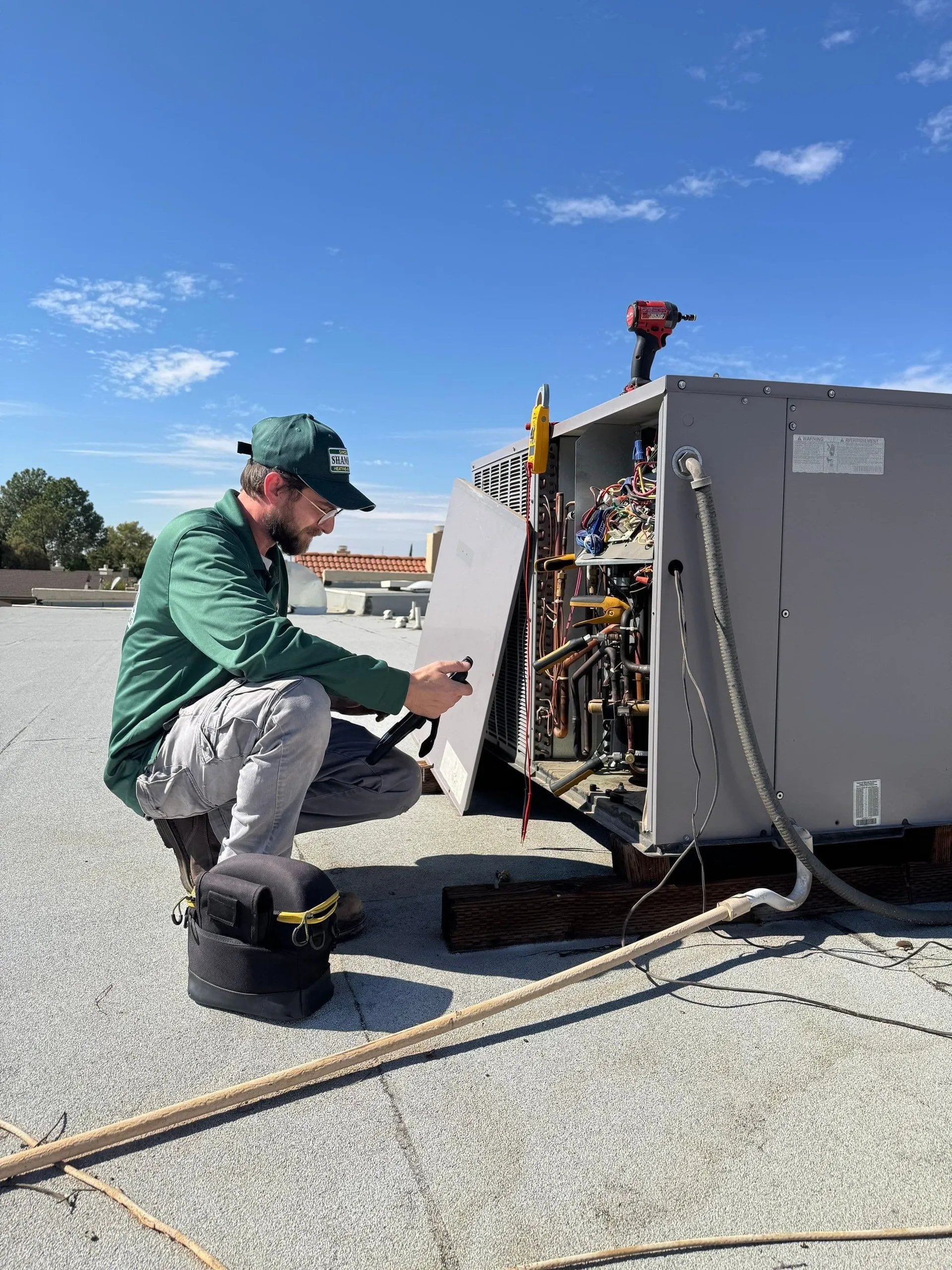
How Does Your HVAC System Actually Work? A Homeowner's Guide
Understanding the basics of how your heating and cooling system operates helps you maintain it better and recognize problems early. Learn the fundamentals of HVAC operation.
How Does Your HVAC System Actually Work? A Homeowner’s Guide
For most homeowners in the Phoenix Valley, the HVAC system is a bit like a magic box. You press a button on the wall in your hallway, and a few moments later, cool relief washes over your living room. As long as the “magic” keeps happening during our scorching summers in Scottsdale or Mesa, most people don’t give it a second thought.
However, your heating and cooling unit is a complex machine relying on physics, chemistry, and electrical engineering to keep you comfortable. Understanding HVAC basics removes the mystery and empowers you to make better decisions about maintenance and repairs. By learning how the system components work together, you can spot small issues before they turn into expensive breakdowns on a 115-degree day.
This homeowner guide will walk you through the science of your system in plain English, explaining exactly what happens behind the scenes when you hear that familiar hum kick on.
The Core Concept: Moving Heat, Not Making Cold
The biggest misconception about air conditioning is that it “creates” cold air. In reality, “cold” is just the absence of heat. You cannot manufacture cold; you can only remove heat.
Your air conditioner works on the principle of heat transfer. Think of your HVAC system as a high-tech sponge. Its job is to soak up the heat from inside your home, carry it outside, and squeeze it out into the atmosphere. Once the heat is removed from the air inside your house, the remaining air is cool and is recirculated back into your rooms.
This process happens in a continuous loop until your thermostat is satisfied. Whether you live in a historic home in downtown Phoenix or a new build in Gilbert, the physics remain the same.
The Key Players: Essential System Components
To understand the process, you need to know the parts involved. A standard central air conditioning system (split system) has two main sections: one inside your home and one outside.
1. The Thermostat (The Brain)
This is the command center. It monitors the indoor temperature and sends electrical signals to the rest of the system to turn on or off. Modern smart thermostats can even learn your schedule to optimize efficiency.
2. The Furnace or Air Handler (The Lungs)
Located inside your home—usually in the attic, a closet, or the garage—this unit houses the blower motor. Its primary job is to pull air in from your home through the return vents and push conditioned air back out through the supply vents. If you have a gas furnace, this is also where the heating elements are located.
3. The Evaporator Coil (The Sponge)
Sitting inside or right next to the air handler is the evaporator coil. This is where the magic happens. Cold refrigerant flows through these copper or aluminum coils. As warm air from your house blows over them, the refrigerant absorbs the heat and moisture from the air.
4. The Condenser Unit (The Muscle)
This is the large, noisy metal box sitting in your backyard or on the side of your house. It contains the compressor and the condenser coil. Its job is to release the heat that was collected inside your home.
5. Refrigerant (The Blood)
Refrigerant is a chemical compound (often referred to by the brand name Freon or Puron) that easily changes from a liquid to a gas and back again. It circulates through copper lines connecting the indoor and outdoor units, carrying the heat load.
6. Ductwork (The Veins)
These are the metal or flexible tubes running through your attic and walls. They deliver the air to every room in your house.
The Cooling Cycle: A Step-by-Step Journey
Let’s trace the journey of the air and refrigerant during a typical cooling cycle in a Chandler home.
Step 1: The Call for Cooling
The temperature in your house rises above your set point (say, 78°F). The thermostat sends a signal to the control board to start the cooling cycle.
Step 2: Air Circulation Begins
The blower fan in your indoor unit turns on. It sucks warm air from your rooms through the return grilles. This air passes through your air filter, which catches dust, pollen, and desert dirt.
Step 3: Heat Absorption
The clean, warm air is forced over the cold evaporator coil. Inside the coil, liquid refrigerant evaporates into a gas. This chemical reaction requires heat, which it steals from the air passing over the coil. As a bonus, this process also pulls humidity out of the air, which drains away as water (condensate).
Step 4: Traveling Outside
The now-gaseous, heat-laden refrigerant travels down the copper “suction line” to the outdoor unit. Meanwhile, the cool air that passed over the coil is pushed back into your ductwork and distributed into your rooms.
Step 5: Heat Release
The compressor in the outdoor unit squeezes the refrigerant gas, raising its temperature and pressure significantly. It pushes this hot gas into the condenser coil. A large fan in the outdoor unit pulls outside air through the coil. Even if it is 110°F outside, the refrigerant is much hotter, so the heat naturally transfers from the refrigerant to the outside air.
Step 6: The Cycle Repeats
As the refrigerant loses its heat, it condenses back into a liquid. It travels back inside through the “liquid line” to the evaporator coil, ready to absorb more heat. This cycle continues until the thermostat reaches the target temperature and shuts the system down.
What About Heating?
In the Phoenix Valley, we use two main types of heating:
- Gas Furnaces: If you have gas lines, you likely have a furnace. When heating is called for, a gas valve opens, burners ignite, and a heat exchanger warms up. The blower fan pushes air over this hot exchanger (instead of the cold coil) to warm your home. The AC compressor outside stays off.
- Heat Pumps: If your home is all-electric, you likely have a heat pump. A heat pump is essentially an air conditioner that can run in reverse. In winter, a reversing valve switches the flow of refrigerant. The outside unit absorbs heat from the outdoor air (yes, there is heat energy even in 40°F air) and brings it inside to release it.
Why HVAC Education Matters for Maintenance
Now that you know how the system works, common maintenance advice makes much more sense.
- Why change the filter? If the filter is clogged, the blower can’t pull air over the evaporator coil. If there isn’t enough warm air blowing over the coil, the refrigerant gets too cold and can freeze the coil into a block of ice, halting the cooling process entirely.
- Why clean the outdoor unit? If the outdoor condenser coil is covered in dirt or leaves, it acts like a winter coat. The system can’t release the heat it absorbed from your house. This causes the compressor to overheat and drive up your electric bill.
- Why check refrigerant levels? If you have a leak, the “sponge” isn’t big enough to soak up the heat. Your system will run continuously without ever cooling your home effectively.
Recognizing Trouble Early
Armed with this knowledge, you can listen and look for signs of trouble:
- Warm air from vents: This likely means the compressor isn’t running or you are low on refrigerant—the heat transfer isn’t happening.
- Weak airflow: This points to a blower motor issue or a severely clogged filter.
- Short cycling: If the unit turns on and off rapidly, it might be overheating or the thermostat might be miscalibrated.
The Shamrock Difference
At Shamrock Heating & Cooling, we believe that an educated customer is our best customer. We don’t just want to fix your AC repair issues; we want you to understand why they happened and how to prevent them in the future.
Our team has spent years mastering the nuances of system components specifically for the harsh Arizona climate. Whether you need a simple AC tune-up or a full system replacement, we apply this deep technical knowledge to ensure your home stays comfortable year-round.
When you understand the mechanics, you realize that your HVAC system is a hardworking machine that deserves professional care. Don’t wait for the magic to stop working.
Trust our expert technicians for all your heating and cooling needs.
Need HVAC Help? We’re Here to Help.
Schedule service with Shamrock Heating & Cooling for fast, reliable comfort.
Schedule Service