
How to Choose the Right HVAC System for Your Home
With so many options available, selecting the best HVAC system for your specific needs can be overwhelming. This guide simplifies the decision-making process.
How to Choose the Right HVAC System for Your Home
Walking into the world of heating and cooling equipment can feel a lot like trying to order off a menu in a foreign language. There are acronyms like SEER, HSPF, and BTU, various fuel types, and a wide range of technologies that all claim to be the “best.” For homeowners in the Phoenix Valley, where a reliable air conditioner is a survival tool rather than just a convenience, making the right choice is critical.
Selecting the correct HVAC system is about more than just picking a brand name or finding the lowest price tag. It requires balancing energy efficiency, budget, home design, and comfort preferences. Whether you live in a sprawling ranch-style home in Scottsdale or a two-story property in Gilbert, this guide will help simplify the HVAC selection process so you can invest with confidence.
Understanding the Different HVAC Types
The first step in choosing a new system is understanding what kind of equipment your home is designed to support. In Arizona, residential HVAC systems generally fall into three main categories, and swapping between them often requires significant infrastructure changes.
Split Systems
This is the most common setup for single-family homes in suburban neighborhoods like Chandler and Mesa. A split system consists of two main components:
- Outdoor Unit: The condenser and compressor sit outside on a concrete pad or adjacent to the house.
- Indoor Unit: The evaporator coil and blower fan (usually part of a furnace or air handler) are located inside, typically in a closet, garage, or attic.
If you currently have a furnace inside and a noisy box outside, you have a split system. When replacing this, you usually replace both units to ensure they “talk” to each other efficiently.
Packaged Units
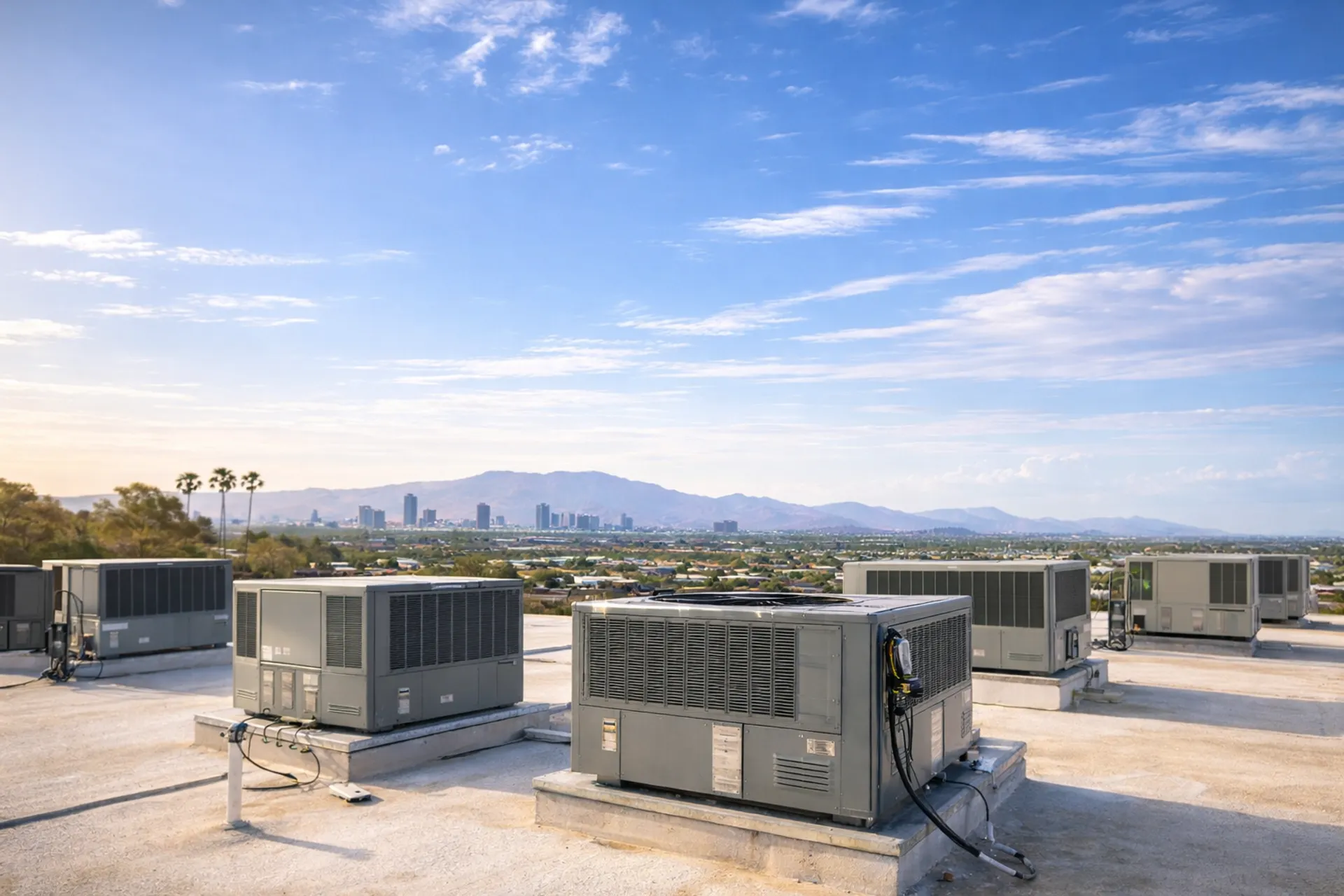
If you don’t see an indoor unit and your outdoor unit is sitting on the roof (common in many Phoenix neighborhoods), you likely have a packaged unit. As the name implies, all components—heating and cooling—are housed in one single metal cabinet. These are space-savers for homes with limited indoor square footage but require a crane for installation.
Ductless Mini-Splits
For room additions, casitas, or garages where running ductwork is impossible, Ductless Mini-Split systems are the gold standard. They consist of a small outdoor compressor and wall-mounted indoor units. They offer incredible efficiency and zone control, allowing you to cool one room without paying to cool the whole house.
The “Goldilocks” Rule: Why System Sizing Matters
One of the biggest misconceptions in HVAC selection is that “bigger is better.” Many homeowners assume that getting a 5-ton unit for a house that only needs a 3-ton unit will just make it cool down faster. In reality, an oversized unit is a disaster for your comfort and your wallet.
The Problem with Oversizing: An air conditioner needs to run for a certain amount of time to remove both heat and humidity from the air. If the unit is too powerful, it will blast the temperature down quickly and shut off (short cycling). This leaves the air feeling clammy and humid, and the frequent starting and stopping wears out the compressor prematurely.
The Problem with Undersizing: Conversely, a unit that is too small will run continuously on hot July afternoons, never reaching the thermostat setting. It will drive your electric bill through the roof while failing to keep you comfortable.
At Shamrock Heating & Cooling, we perform a detailed load calculation (Manual J) that considers your home’s square footage, insulation quality, window orientation, and ceiling height to find the perfect size for your specific needs.
Decoding Efficiency Ratings (SEER2)
You will see yellow “Energy Guide” stickers on every unit, prominently displaying a SEER2 rating. SEER stands for Seasonal Energy Efficiency Ratio. Think of it like “miles per gallon” for your air conditioner.
- Standard Efficiency (SEER2 13.4-15): These units are less expensive upfront and meet federal minimum standards. They are reliable but consume more electricity.
- High Efficiency (SEER2 16-20+): These units use advanced technology, such as variable-speed compressors, to adjust their cooling output in real-time.
In a mild climate, high efficiency might not be worth the extra cost. But in the Phoenix Valley, where our ACs run for 6-8 months of the year, the energy savings from a high-SEER system can pay for the price difference over just a few years.
Features That Enhance Comfort
Modern residential HVAC technology offers features that go beyond just “on” and “off.” When choosing a system, consider these enhancements:
Two-Stage or Variable Speed Compressors
Old systems run at 100% capacity or 0%. It’s like driving a car with the gas pedal floored or completely released. Two-stage units can run at a lower capacity (like 60%) on mild days, maintaining a steady temperature and using less energy. This is perfect for our shoulder seasons in April and October.
Smart Thermostats
Pairing your new system with a smart thermostat allows you to control the temperature from your phone. You can raise the temp while you’re at work and cool it down before you get home, saving significant money without sacrificing comfort.
Indoor Air Quality Add-ons
Since you are already investing in a new system, it is the perfect time to consider Indoor Air Quality products. Air scrubbers and upgraded filtration systems can be integrated directly into the new ductwork to reduce dust, allergens, and pet dander.
Heat Pumps vs. Gas Furnaces
Another major decision is how you want to heat your home.
- Gas Furnaces: Powerful and fast heating. If you already have gas lines, this is a traditional choice.
- Heat Pumps: These are electric units that reverse the AC process to bring heat inside. In our climate, where winters are mild, heat pumps are incredibly efficient. Modern heat pumps can handle temperatures well below freezing, making them a viable all-in-one solution for Phoenix homeowners.
The Installation Factor
Here is the most important secret of the industry: The brand of the equipment matters less than the quality of the installation.
You can buy the most expensive, top-tier system on the market, but if it is installed poorly—with leaky ducts, improper refrigerant charge, or bad electrical connections—it will fail just as fast as a cheap unit.
When choosing a contractor, look for:
- Local Experience: Someone who knows the specific challenges of Tempe dust and Scottsdale heat.
- Guarantees: Warranties on labor, not just parts.
- Transparency: Clear pricing without hidden fees.
Making the Investment Easier
We know that a new HVAC system is a significant financial commitment. To help make the decision easier, look into available financial incentives. Many high-efficiency systems qualify for federal tax credits or rebates from local utility providers like SRP and APS. We also offer our own financing options to help spread the cost over time. You can view our current offers on our deals and financing page.
Trust the Phoenix Experts
At Shamrock Heating & Cooling, we don’t believe in high-pressure sales tactics. We believe in education. Our goal is to assess your home, explain your options clearly, and help you choose the system that fits your budget and lifestyle.
Whether you need a robust AC installation for a large family home or a compact solution for a condo, we have the expertise to get it done right the first time.
Schedule your HVAC service today to keep your system running smoothly year-round.
Need HVAC Help? We’re Here to Help.
Schedule service with Shamrock Heating & Cooling for fast, reliable comfort.
Schedule Service