
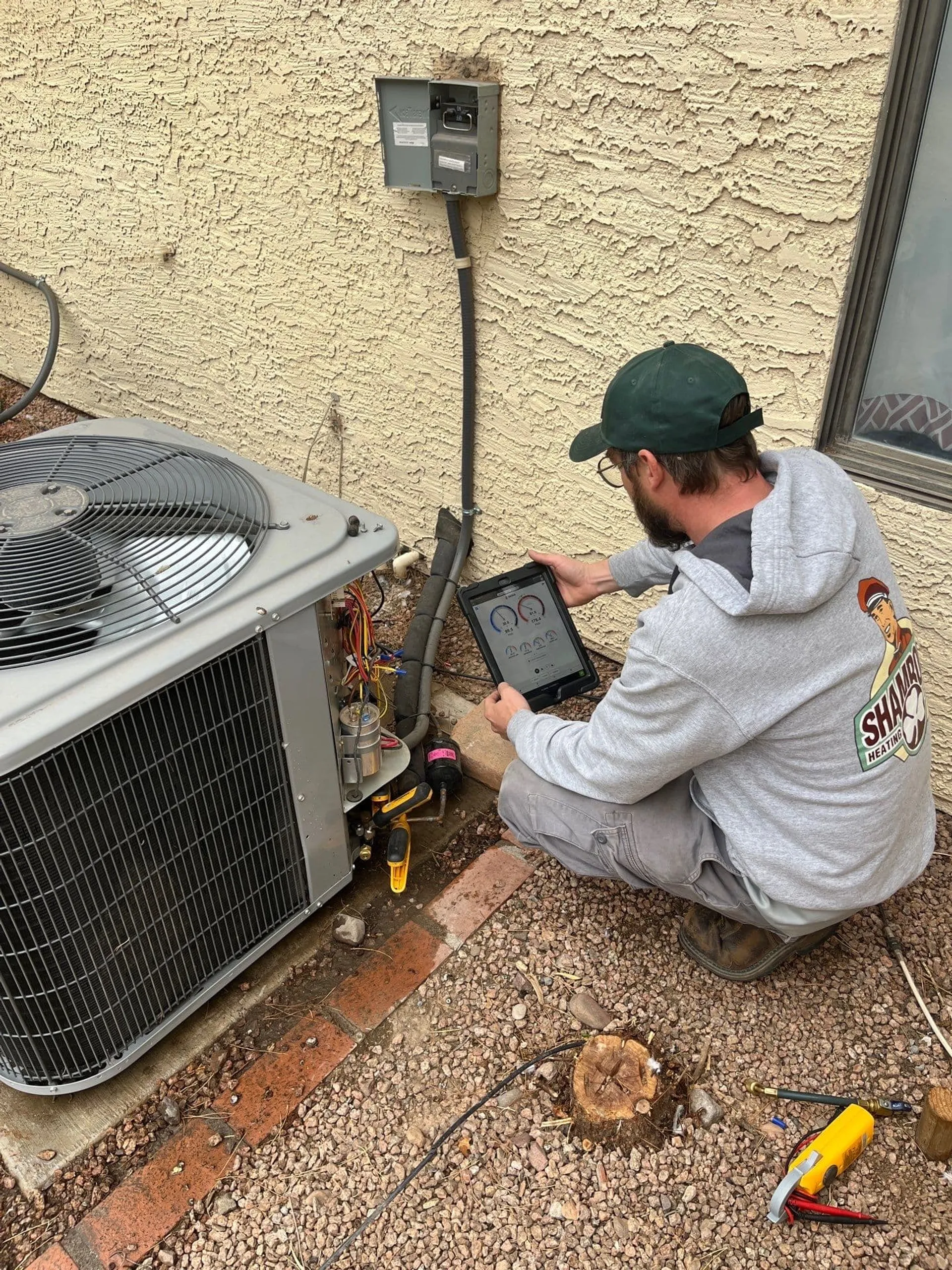
HVAC Installation Cost Guide: What to Expect for Your Home
Installing a new HVAC system is a significant investment. Break down the factors that influence installation costs and learn how to get the best value.
HVAC Installation Cost Guide: What to Expect for Your Home
For homeowners in the Phoenix Valley, a functioning air conditioning and heating system isn’t just a luxury—it is essential infrastructure. When your old system finally gives up the ghost after years of battling our extreme desert heat, the prospect of purchasing a new HVAC system can feel daunting. It is likely one of the larger investments you will make for your home, comparable to a kitchen remodel or buying a vehicle.
Because every home in neighborhoods like Scottsdale, Gilbert, and Mesa is built differently, there is no single “sticker price” for a new system. You might see advertisements for generic units, but the final cost involves much more than just the metal box sitting on your roof or in your backyard.
Understanding what goes into the cost of an HVAC installation can help you budget effectively and ensure you are getting the best value for your money. Here is a breakdown of the key factors that influence the price of a system replacement and why quality matters more than just the lowest bid.
1. System Type and Configuration
The physical design of your home dictates the type of equipment you need, which is the baseline for the cost.
- Split Systems: Most common in residential suburbs, these have a condenser unit outside (on the ground) and a furnace or air handler inside (in the attic, closet, or garage). Replacing both halves of the system involves more labor and components.
- Packaged Units: Often found on rooftops in Phoenix, these “all-in-one” units house both the heating and cooling components in a single cabinet. These can sometimes be more straightforward to swap out, but crane fees are often required to lift the unit onto the roof.
- Heat Pumps vs. Furnaces: If you have a gas furnace, the equipment cost differs from an all-electric heat pump system. Heat pumps are increasingly popular in the Valley for their efficiency in both heating and cooling modes.
2. Size and Capacity (Tonnage)
In the world of HVAC, size matters—but bigger isn’t always better. The “size” of an AC unit is measured in tons (the cooling capacity). A 2,500-square-foot home in Chandler will require a larger system than a 1,200-square-foot condo in Tempe.
However, simply buying the biggest unit available is a mistake. An oversized unit will cool the house too quickly, shut off, and then turn back on rapidly (short cycling). This increases wear and tear and fails to remove humidity. Conversely, an undersized unit will run constantly and never reach the set temperature.
A professional installation includes a load calculation to determine the exact tonnage required based on your square footage, insulation levels, window exposure, and ceiling height.
3. Efficiency Ratings (SEER2)
One of the biggest factors influencing the upfront cost is energy efficiency. Air conditioners are rated by SEER2 (Seasonal Energy Efficiency Ratio).
- Standard Efficiency: These units meet the federal minimum requirements. They have a lower upfront cost but will result in higher monthly electricity bills.
- High Efficiency: These units use advanced technology, such as variable-speed compressors, to run more quietly and use significantly less electricity. While the initial investment is higher, the savings on your APS or SRP bill can offset the cost over the life of the system.
Think of it like buying a car: a hybrid might cost more to drive off the lot than a standard sedan, but you save money at the gas pump every week.
4. Ductwork and Infrastructure
A new engine won’t make a car run fast if the tires are flat. Similarly, a high-end HVAC system cannot perform if your ductwork is leaking or collapsed.
During a system replacement, we inspect the existing ductwork. If your ducts are old, uninsulated, or designed poorly, they may need to be repaired or modified to handle the airflow of the new modern system. This ensures you actually get the efficiency you are paying for.
Additionally, older homes may need electrical upgrades to the circuit breaker panel or new thermostat wiring to accommodate modern, smart-communicating HVAC technology.
5. Installation Quality and Labor
This is the variable that homeowners often overlook, yet it is the most critical. You can buy the most expensive, top-of-the-line air conditioner on the market, but if it is installed incorrectly, it will fail prematurely and run inefficiently.
Quality labor involves:
- Properly sizing the refrigerant lines.
- Brazing connections with nitrogen to prevent oxidation.
- Pulling a deep vacuum to remove moisture from the lines.
- Testing airflow and static pressure.
Discount installers often cut corners on these steps to lower the price. At Shamrock Heating & Cooling, our technicians are trained to adhere to strict manufacturer specifications, ensuring your warranty remains valid and your system runs smoothly for years.
6. Rebates and Tax Credits
The final cost of your new system can often be reduced significantly through financial incentives.
- Federal Tax Credits: Under the Inflation Reduction Act, high-efficiency heat pumps and air conditioners may qualify for significant federal tax credits.
- Utility Rebates: Local utility providers often offer cash rebates for installing high-efficiency systems that reduce strain on the power grid.
- Manufacturer Rebates: Seasonal promotions from manufacturers can also lower the net cost.
We help our customers navigate these options to ensure they leave no money on the table.
Financing Options
We understand that an HVAC replacement is often an unexpected expense. You shouldn’t have to drain your savings to stay cool in the summer. That is why we offer flexible financing options. This allows you to break the investment into manageable monthly payments, so you can get the comfort you need now without the immediate financial burden. You can check our deals and financing page for current offers.
Investing in Your Home’s Future
When you look at the total cost of a new HVAC system, remember that you are buying 10 to 15 years of comfort. A reliable system adds value to your home, improves your indoor air quality, and provides peace of mind when the temperatures hit triple digits.
At Shamrock Heating & Cooling, we don’t believe in high-pressure sales. We believe in educating our neighbors so they can make the right choice for their budget and their home. Whether you need a simple AC installation or a complex system redesign, we provide transparent estimates with no hidden fees.
Reach out to our team for reliable HVAC service.
Need HVAC Help? We’re Here to Help.
Schedule service with Shamrock Heating & Cooling for fast, reliable comfort.
Schedule Service