
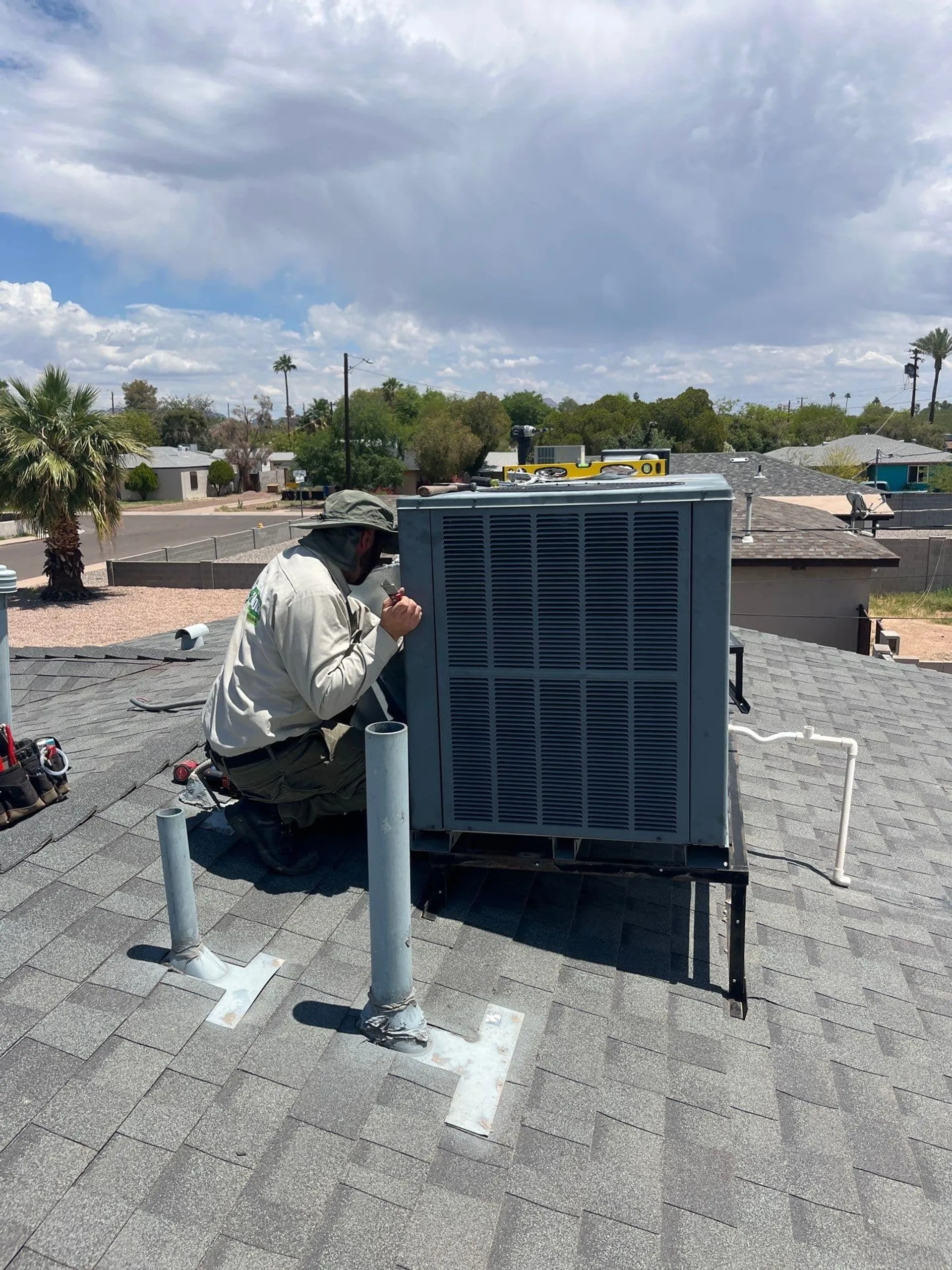
HVAC Requirements for Phoenix Homes: Sizing and Selection Guide
Phoenix's extreme heat requires properly sized cooling systems. Understand the unique HVAC needs of desert homes and how to choose the right unit.
HVAC Requirements for Phoenix Homes: Sizing and Selection Guide
Living in the Valley of the Sun means our relationship with air conditioning is different than anywhere else in the country. In many states, AC is a luxury for a few weeks of summer. In Phoenix, Mesa, and Scottsdale, it is a survival necessity for nearly half the year. Because of our extreme desert climate, selecting an HVAC system isn’t as simple as picking a box off a shelf.
When it comes to Phoenix HVAC requirements, getting the details right is crucial. An undersized unit will run constantly without ever cooling your home, while an oversized unit can cause humidity issues and short-cycle itself to an early grave. Understanding the principles of system sizing and selection can help you make an informed decision when it’s time for a replacement.
Here is what every homeowner needs to know about cooling a home in the Arizona heat.
Why the “Rule of Thumb” Doesn’t Work Here
In milder climates, contractors might use a simple rule of thumb based solely on square footage to size an air conditioner (e.g., “1 ton for every 500 square feet”). In the Phoenix metro area, this method is often inaccurate and can lead to expensive mistakes.
Our heat load is unique. We have days where the ambient temperature exceeds 115°F, and our monsoon season introduces sudden humidity spikes. Furthermore, the construction of your home plays a massive role. A 2,000-square-foot home built in the 1970s with single-pane aluminum windows has a vastly different cooling requirement than a modern 2,000-square-foot home in Gilbert with high-efficiency insulation and Low-E glass.
The Science of Sizing: Manual J Load Calculation
To ensure Arizona cooling efficiency, professional HVAC contractors use a calculation known as a “Manual J.” This is a detailed analysis that determines exactly how much heat your home gains throughout the day.
Several factors go into this calculation:
- Insulation Levels: How much heat is stopping at your attic floor?
- Windows: Which direction do they face? How much solar heat do they let in? (West-facing windows are particularly brutal in our area).
- Occupancy: How many people live in the home? Humans generate heat.
- Appliances and Lighting: Kitchens and electronics add to the indoor heat load.
- Orientation: How is the house positioned relative to the sun?
By calculating the precise load, we can recommend a system that matches your home’s needs exactly.
The Risks of Incorrect Sizing
Why is sizing so critical? It boils down to the “Goldilocks” principle. You need a system that is just right.
The Problem with Undersizing
If your unit is too small, it will run continuously on hot days. It will struggle to drop the indoor temperature to your desired setpoint, leading to a warm, uncomfortable house and an astronomical electric bill. The constant running also causes significant wear and tear, leading to premature AC repair needs.
The Problem with Oversizing
Many homeowners assume “bigger is better.” This is a myth. An air conditioner needs to run for a specific duration to complete a full cycle. If the unit is too big, it cools the air too quickly and shuts off (short-cycling).
- Humidity Issues: The unit doesn’t run long enough to pull moisture out of the air, leaving your home feeling clammy.
- Equipment Stress: The start-up phase is the hardest part of the cycle for the compressor. Turning on and off frequently shortens the lifespan of the equipment.
- Uneven Cooling: Short blasts of cold air often fail to reach the bedrooms at the far end of the ductwork.
Choosing the Right Technology for Phoenix
Once you know the size you need, you have to choose the type of system. In the Valley, efficiency ratings (SEER2) are vital. Because we run our ACs so often, investing in a higher SEER2 unit often pays for itself in energy savings faster here than in cooler states.
Single-Stage vs. Variable Speed
- Single-Stage: The unit is either 100% on or 100% off. These are reliable and lower cost upfront, but they can be louder and less efficient.
- Variable Speed (Inverter): These systems can ramp up or down like a dimmer switch. They are perfect for Phoenix because they can run at a low, quiet speed to maintain temperature, only ramping up to 100% on the hottest afternoons. This provides superior comfort and lower energy bills.
Heat Pumps vs. Split Systems
Given our mild winters, heat pumps are an incredibly popular choice in Arizona. A heat pump looks and acts like an AC in the summer, but runs in reverse to provide heating in the winter. They are often more efficient than gas furnaces for our climate, though many homes in Chandler and Tempe still utilize gas heating.
How Shamrock Can Help
At Shamrock Heating & Cooling, we don’t guess—we measure. Whether you are looking for a new AC installation or a full system replacement, our team takes the time to evaluate your home’s unique thermal profile.
We serve the entire Phoenix Valley, helping families navigate the complexities of SEER2 ratings, tax credits, and financing options. Our goal is to ensure you get a system that keeps you cool during the dog days of summer without wasting energy.
If you are unsure if your current system is the right size, or if you are planning a renovation that might change your cooling needs, we are here to guide you.
Call us for professional HVAC solutions tailored to your home.
Need HVAC Help? We’re Here to Help.
Schedule service with Shamrock Heating & Cooling for fast, reliable comfort.
Schedule Service