
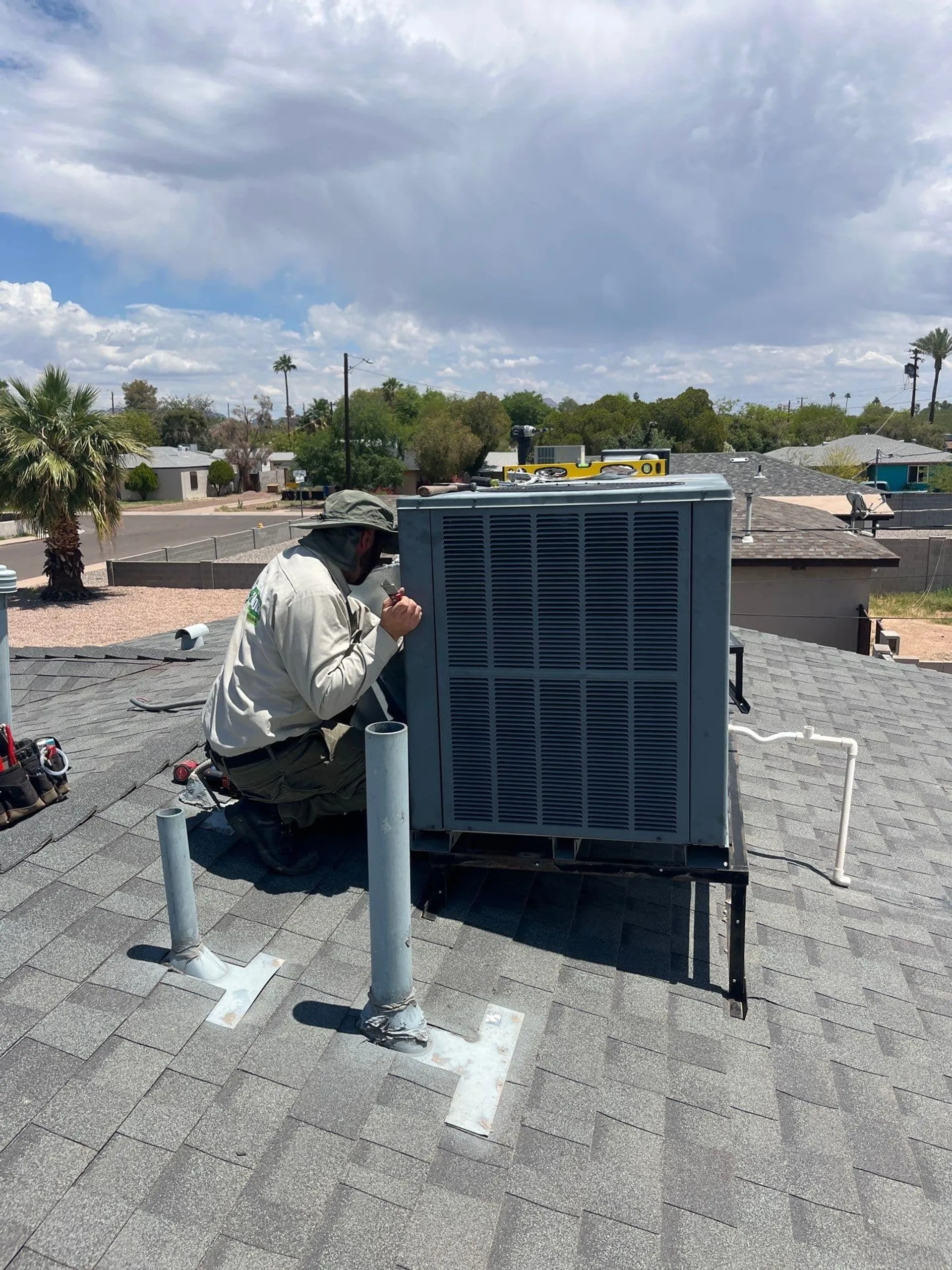
HVAC Short Cycling: Why Your System Turns On and Off Repeatedly
When your HVAC system cycles on and off too frequently, it reduces efficiency and increases wear. Learn the causes of short cycling and how to stop it in the Phoenix Valley.
HVAC Short Cycling: Why Your System Turns On and Off Repeatedly
There is a familiar rhythm to life in the Phoenix Valley during the summer: the hum of the air conditioner kicking on, the steady whoosh of cool air, and then the silence as it shuts off after doing its job. Usually, a healthy cooling cycle lasts about 15 to 20 minutes. But what if your system turns on, runs for just a few minutes, shuts off, and then starts up again almost immediately?
This phenomenon is known as short cycling. It is more than just an annoyance; it is a cry for help from your HVAC system. Frequent cycling puts immense stress on your equipment, drives your energy bills through the roof, and fails to properly cool or dehumidify your home.
Understanding why this happens is the first step toward restoring your system efficiency and protecting your investment. Here are the most common culprits behind HVAC cycling issues and what you can do about them.
Why Short Cycling is Dangerous for Your AC
Think of your air conditioner like a car in stop-and-go traffic. A car gets much better gas mileage and experiences less wear when cruising at a steady speed on the highway than it does stopping every block.
Your AC compressor uses the most electricity when it first starts up. If it starts and stops six times an hour instead of two, your energy consumption spikes. More importantly, the compressor—the heart of your system and the most expensive component to replace—can overheat and burn out from the constant engagement.
Cause #1: Clogged Air Filters
The most common (and easiest to fix) cause of short cycling is a dirty air filter. In Arizona, dust is a constant battle. If your filter is clogged with dust, pet dander, or pollen, it restricts airflow to the unit.
When airflow is restricted, the internal components can overheat (in a furnace) or freeze up (in an air conditioner). Modern systems have safety limit switches designed to prevent fires or catastrophic failure. When the system detects this stress, it performs an emergency shutoff. Once the unit cools down or thaws slightly, it tries to run again, repeating the cycle.
Solution: Check your air filter every month. If it looks gray or fuzzy, replace it.
Cause #2: Thermostat Placement and Issues
Sometimes the equipment is fine, but the instructions it receives are wrong. Your thermostat measures the temperature of the air directly around it.
If your thermostat is located near a heat source—such as a sunny window in Scottsdale, a lamp, or the kitchen oven—it will think the house is hotter than it actually is. It kicks the AC on. Once the burst of cool air hits the thermostat, it satisfies the reading quickly and shuts off, only to heat up again moments later.
Similarly, low batteries or loose wiring can cause the thermostat to send erratic signals to the control board, resulting in rapid cycling.
Cause #3: Oversized HVAC Units
There is a common misconception that “bigger is better” when it comes to air conditioning. However, an AC unit must be perfectly sized for the square footage and insulation of your home.
If a unit is too large for your home in Gilbert or Mesa, it will cool the air incredibly fast. The thermostat hits the target temperature in just a few minutes and shuts the unit off.
The Problem: While the air temp is low, the unit hasn’t run long enough to remove humidity. This leaves your home feeling cold but clammy. The rapid on-off cycle also prevents the oil in the compressor from circulating properly, leading to premature breakdown.
Cause #4: Low Refrigerant and Leaks
Your AC relies on a specific level of refrigerant to transfer heat. If you have a leak, the pressure inside the system drops.
Most modern units have a low-pressure safety switch. When the refrigerant pressure gets too low, this switch trips and shuts the compressor off to save it from damage. After the pressure equalizes slightly while off, the system tries to restart, only to trip the switch again almost immediately.
This is a serious mechanical issue that requires professional AC repair.
Cause #5: Frozen Evaporator Coils
If you ignore a dirty filter or a refrigerant leak, your evaporator coils may freeze over. Ice acts as an insulator, preventing the coils from absorbing heat.
The system will work harder and harder to cool the home, eventually overheating or triggering a safety limit switch. The unit shuts off, the ice melts a little, and the system tries again. If you see ice on your outdoor unit or the copper lines, turn the system off immediately and call for help.
How Shamrock Can Help
Short cycling is rarely a problem that fixes itself. It usually indicates that a safety mechanism is working to prevent a larger disaster. Ignored long enough, it will result in a compressor failure.
At Shamrock Heating & Cooling, we specialize in diagnosing these tricky HVAC cycling issues. Whether you need a simple AC Tune-up to clean your coils, a thermostat recalibration, or a repair for a refrigerant leak, our team serves the entire Phoenix metro area with prompt, expert service.
Don’t let a stuttering AC run up your electric bill.
Schedule your HVAC service today to keep your system running smoothly year-round.
Need HVAC Help? We’re Here to Help.
Schedule service with Shamrock Heating & Cooling for fast, reliable comfort.
Schedule Service