
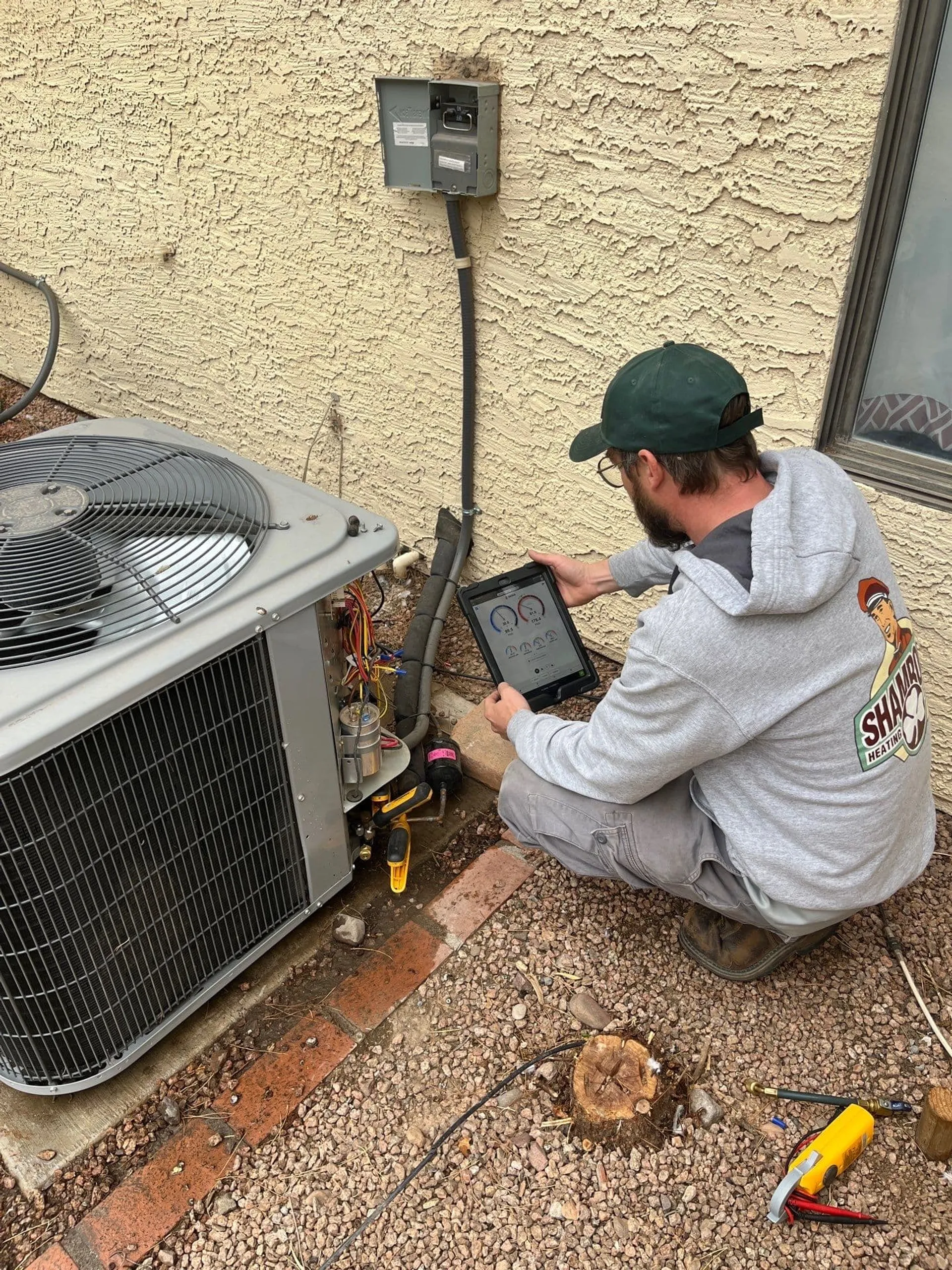
HVAC Tasks You Can Do Yourself vs. When to Call Professionals
Some HVAC maintenance is homeowner-friendly, but other tasks require professionals. Know your limits to avoid costly mistakes and keep your Phoenix home cool.
HVAC Tasks You Can Do Yourself vs. When to Call Professionals
As a homeowner in the Phoenix Valley, you know that your air conditioner is the most valuable appliance in your house. When it is working well, life is good. When it acts up, the urge to fix it immediately—and save money in the process—can be strong.
While we admire the “do-it-yourself” spirit, HVAC systems are complex machines involving high-voltage electricity, pressurized refrigerants, and delicate calibration. There is a fine line between helpful homeowner maintenance and dangerous tinkering. To help you navigate this, we have broken down which HVAC tasks are safe for you to handle and when it is time to call in the cavalry.
The Green Light: Safe DIY Maintenance Tasks
There are several simple maintenance steps you can take to keep your system running efficiently. These tasks do not require special tools or technical training, but they make a massive difference in your system’s longevity.
1. Changing the Air Filter
This is the single most important thing you can do. In dusty areas like Chandler, Mesa, and Gilbert, filters can clog up quickly. A dirty filter restricts airflow, forcing your system to work harder and driving up energy bills. Check your filter once a month and replace it when it looks gray or fuzzy.
2. Clearing the Area Around the Outdoor Unit
Your outdoor condenser needs to breathe. Over time, bushes, weeds, and debris can crowd the unit, restricting airflow.
- Trim back hedges at least two feet from the unit.
- Clear away dead leaves, grass clippings, and trash.
- Note: Do not use a pressure washer on the fins; they are fragile and can bend easily. A gentle hose rinse is usually sufficient for external dust.
3. Checking the Thermostat
If your AC isn’t turning on, the problem might be as simple as the batteries in your thermostat. Changing these annually is a great habit. Also, verify that the settings haven’t been accidentally bumped to “Heat” or “Fan On” (instead of “Auto”).
4. Inspecting Vents and Registers
Walk through your home and ensure all supply and return vents are open and unobstructed. It is common for furniture, rugs, or curtains to accidentally block a vent, which disrupts the airflow balance of the house.
The Red Light: When to Call a Professional
Once you move past the external cleaning and filter changes, you enter the territory of internal components. These areas require professional service for safety and warranty reasons.
1. Electrical Issues
If your system is tripping breakers, making buzzing sounds, or refusing to start, you are likely dealing with an electrical failure.
- Capacitors: These components store high-voltage electricity even when the power is off. Mishandling them can result in severe shock.
- Wiring: Loose or burnt wiring requires a trained technician to repair safely.
2. Refrigerant Leaks
If your system is running but blowing warm air, or if you see ice forming on the coils, you might have a refrigerant issue. Handling refrigerant requires EPA certification. You cannot simply “top it off” yourself; a professional must locate the leak, repair it, and recharge the system to the manufacturer’s exact specifications.
3. Strange Noises
Grinding, squealing, or banging noises usually indicate a mechanical failure, such as a failing blower motor or a loose fan blade. Ignoring these sounds or trying to force the parts to move can turn a simple repair into a total system replacement.
4. Water Leaks
While you can pour a cup of vinegar down the condensate drain line to prevent algae buildup, an active water leak often indicates a clog deep in the line or a rusted drain pan. Professional tools are often needed to clear the blockage without damaging the HVAC.
The Risks of DIY Repairs
Attempting complex HVAC tasks without training carries significant risks.
- Voiding the Warranty: Most equipment manufacturers require proof of professional maintenance to honor their warranties. If you attempt a repair and break a part, you may be on the hook for the entire cost.
- Safety Hazards: Between natural gas in furnaces and 240-volt electricity in AC units, the potential for injury is real.
- Higher Long-Term Costs: We often see homeowners buy a part online, install it incorrectly, and burn out the compressor. What could have been a minor repair becomes a major expense.
How Shamrock Can Help
At Shamrock Heating & Cooling, we are here to handle the heavy lifting. We serve the entire Phoenix metro area, including Scottsdale, Tempe, and beyond.
Our AC Tune-up services are designed to catch small issues before they become big problems. We check the refrigerant levels, tighten electrical connections, lubricate moving parts, and flush drain lines—all things that go beyond standard DIY maintenance.
If your system does break down, our team is ready for AC repair or heating repair. We have the diagnostic tools to pinpoint the root cause quickly, saving you time, frustration, and money.
By handling the simple tasks yourself and trusting us with the technical work, you create a partnership that keeps your home comfortable year-round.
Reach out to our team for reliable HVAC service.
Need HVAC Help? We’re Here to Help.
Schedule service with Shamrock Heating & Cooling for fast, reliable comfort.
Schedule Service