
Preventing Rust and Corrosion in HVAC Systems
Even in the dry Arizona climate, moisture and chemicals can cause significant corrosion. Learn how to protect your HVAC investment from rust damage.
Preventing Rust and Corrosion in HVAC Systems
When living in the Phoenix Valley, rust is usually the last thing on a homeowner’s mind. We associate corrosion with salty ocean air or humid southern swamps, not the arid desert landscape of Arizona. However, surprisingly, rust prevention is a critical aspect of maintaining an air conditioning system in our climate.
Despite our dry air, your HVAC system creates its own localized environment of moisture and temperature fluctuation. Without proper care, critical components can degrade, leading to expensive leaks and premature system failure. Understanding the hidden causes of corrosion and taking steps for metal protection can add years to your equipment’s life and keep your home comfortable.
Why Does Rust Happen in the Desert?
It seems contradictory that metal would rust in a place with 10% humidity. However, your air conditioner works by removing heat and moisture from your home. This process naturally creates condensation.
The Condensate Factor
Inside your indoor unit, the evaporator coil gets very cold. As warm air passes over it, water pulls out of the air—just like a cold soda can sweating on a hot day. If this water isn’t drained properly, or if it sits in a rusted drain pan, it creates a breeding ground for oxidation.
The Monsoon Effect
During our summer monsoon season in July and August, humidity spikes. This combination of intense heat and moisture accelerates chemical reactions on metal surfaces, specifically the outdoor condenser coils found in backyards across Tempe and Mesa.
Chemical Exposure
Corrosion isn’t just about water; it’s about chemistry. Volatile Organic Compounds (VOCs) from household cleaners, hairsprays, and even new carpets can be drawn into the AC system. These chemicals can cling to the copper coils and eat away at the metal, a process known as formicary corrosion.
The “Dog Urine” Destroyer
For many homeowners in Scottsdale and Gilbert, the biggest threat to their outdoor unit isn’t the weather—it’s the family pet.
Dog urine is highly acidic. When a dog marks the outdoor condenser unit, the urine eats through the aluminum fins and copper tubing with alarming speed. This causes the metal to crumble to dust, completely destroying the unit’s ability to release heat. This type of damage is rarely repairable and often leads to a full AC replacement.
The Consequences of Ignoring Corrosion
Rust is more than just an aesthetic issue; it is a structural and functional failure of your system.
- Refrigerant Leaks: The most common result of coil corrosion is “pinhole leaks.” These microscopic holes allow refrigerant to escape. A system low on refrigerant will struggle to cool, run constantly, and eventually burn out the compressor.
- Reduced Efficiency: As rust builds up on the coils, it acts as an insulator. The system can’t transfer heat effectively, meaning it has to run longer and work harder to achieve the same temperature, driving up your electric bill.
- Water Damage: If the emergency drain pan rusts through, water can leak into your ceiling, attic, or walls, causing expensive structural damage to your home.
Practical Steps for Equipment Longevity
Protecting your investment doesn’t require a degree in chemistry. Here are several practical steps you can take to minimize corrosion.
1. Create a “Pet-Free” Zone
If you have dogs, install a small decorative fence around your outdoor unit. Ensure it is far enough away to prevent marking but open enough to allow airflow (at least 2–3 feet of clearance).
2. Watch Where You Store Chemicals
Never store pool chemicals, paints, or fertilizers near your outdoor unit or inside the mechanical closet with your furnace. The fumes from chlorine and acids are incredibly corrosive to HVAC copper.
3. Keep Vegetation Trimmed
Plants release moisture and can restrict airflow. Keep bushes and shrubs trimmed back from the outdoor unit to allow it to dry out quickly after a rainstorm or morning dew.
4. Upgrade Your Filtration
High-quality air filters can trap some of the airborne particulates and VOCs before they settle on your delicate indoor coils.
How Shamrock Can Help
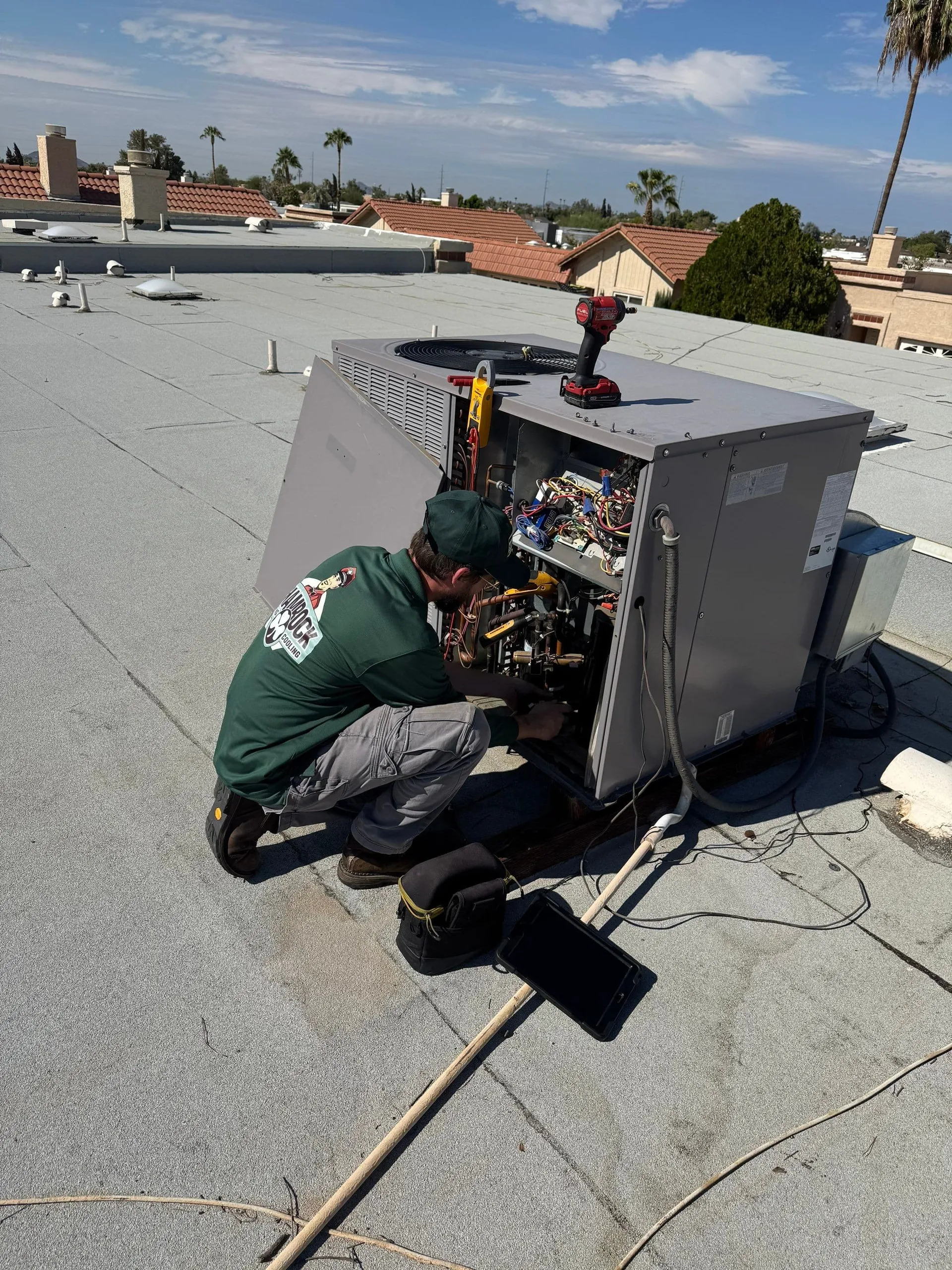
The most effective defense against rust is routine professional maintenance. At Shamrock Heating & Cooling, our technicians are trained to spot the early signs of corrosion before they turn into major leaks.
During a comprehensive AC Tune-up, we perform several critical tasks for rust prevention:
- Coil Inspection: We check for early signs of pitting or oxidation on both indoor and outdoor coils.
- Drain Cleaning: We clear the condensate line and inspect the drain pan to ensure water is flowing away from the unit, not pooling inside it.
- Surface Cleaning: We carefully clean the outdoor condenser coils to remove dirt, bird droppings, and debris that can trap moisture against the metal.
If your system is already showing signs of wear, or if you are worried about the longevity of a new installation, ask us about protective coatings. For certain environments, applying a specialized coating to the coils can provide a robust shield against harsh elements.
Don’t let rust eat away at your comfort. Protecting your system now saves you money on AC repair later. Check out our deals and financing for current specials on preventative maintenance.
Reach out to our team for reliable HVAC service.
Need HVAC Help? We’re Here to Help.
Schedule service with Shamrock Heating & Cooling for fast, reliable comfort.
Schedule Service