
Protecting Your HVAC System During Arizona Monsoon Season
Arizona's monsoon season brings unique challenges for outdoor HVAC units. Learn how to protect your system from dust storms and heavy rain in the Phoenix Valley.
Protecting Your HVAC System During Arizona Monsoon Season
For residents of the Phoenix Valley, the summer months are defined by two things: intense heat and the dramatic arrival of the monsoon. While the sudden downpours and drop in temperature can be a welcome relief, Arizona weather during this season is notoriously harsh on outdoor equipment.
Your air conditioner is built to withstand the elements, but the unique combination of driving rain, intense lightning, and massive dust walls (haboobs) can test the limits of even the toughest units. Taking proactive steps for HVAC protection before and during storm season can prevent costly breakdowns and ensure your home stays cool when the humidity spikes.
Here is what you need to know to safeguard your comfort system against the desert’s fiercest weather.
The Wall of Dust: Battling the Haboob
The most visually striking part of our monsoon season is the dust storm. When a wall of dust rolls through Chandler or Gilbert, it coats everything in its path with a fine layer of silt. For your outdoor AC unit (the condenser), this is a major problem.
Your condenser relies on airflow to release the heat it absorbed from inside your house. If the metal fins of the coil are clogged with mud or dust, the system cannot release that heat efficiently. It forces the compressor to work much harder and run longer to cool your home, leading to higher energy bills and potential overheating.
Solution: After a major dust storm, take a garden hose and gently rinse off your outdoor unit. Do not use high pressure, as this can bend the delicate aluminum fins. Spray from the top down to wash the dust away. If the grime is stuck, a professional AC Tune-up includes a deep chemical clean of the coils.
Lightning and Electrical Surges
Monsoon storms in the Valley are often accompanied by spectacular lightning shows. While a direct hit to your home is rare, lightning strikes in the neighborhood can send power surges through the electrical grid.
Modern HVAC systems are packed with sensitive electronics, including circuit boards and sensors. A voltage spike can fry these components instantly or cause invisible damage that leads to premature failure months later.
Solution: Consider having a dedicated HVAC surge protector installed. Unlike the power strip at your computer desk, these are robust devices installed directly at the unit’s disconnect box. They act as a gatekeeper, absorbing excess voltage before it can damage your compressor or fan motor.
High Humidity and Drainage Issues
We often say, “It’s a dry heat,” but during July and August, that isn’t entirely true. Monsoon season brings a significant spike in humidity. Your air conditioner doesn’t just cool the air; it also dehumidifies it.
When the air is humid, your AC pulls significantly more moisture out of your home’s air. This water collects in a drain pan and flows out through a condensate line. If that line is partially clogged with algae or dust—common issues in outdoor unit care—the excess water can back up.
The Risk: A clogged drain can trigger a safety switch that shuts off your AC entirely to prevent flooding. In worse cases, it can overflow and cause water damage to your ceiling or attic.
Solution: Locate your condensate drain line (usually a white PVC pipe near the outdoor unit) and ensure it is dripping steadily when the AC is running. If you see water pooling around the indoor unit, call for AC repair immediately.
Wind and Debris
Microbursts can generate winds over 60 mph, easily tossing patio furniture, tree branches, and trampolines across the yard.
If you have a ground-mounted unit, ensure the area surrounding it is clear. Trim back any trees or heavy bushes that could snap and fall onto the fan grill.
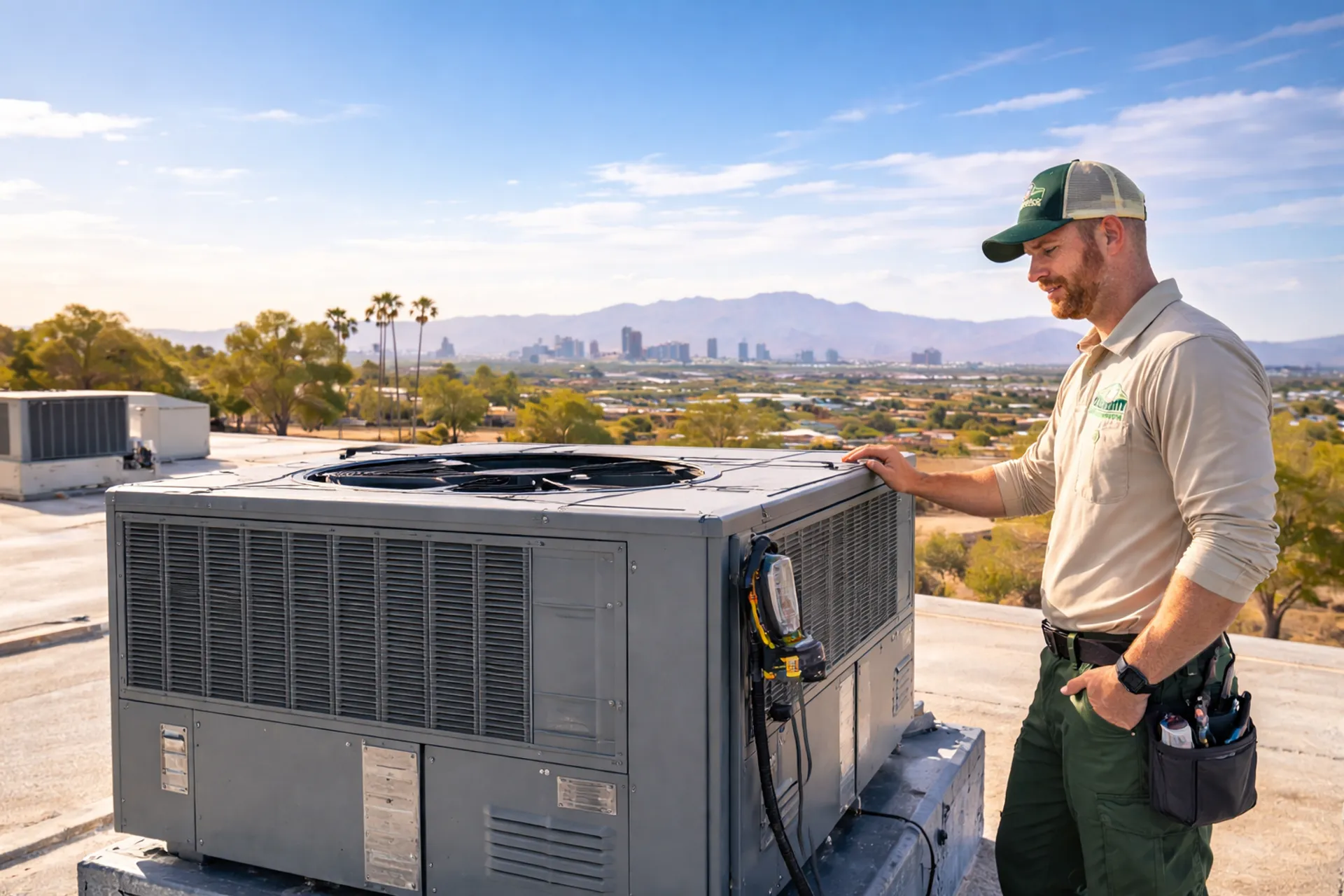
For homeowners with rooftop units (common in Mesa and Scottsdale), wind is less of a debris threat but can impact the unit’s stability if it wasn’t secured properly. While rare, high winds can damage the ductwork transitions on the roof, leading to air leaks that condition the outdoors instead of your living room.
Post-Storm Checklist
Once the dust settles and the rain stops, do a quick inspection of your system:
- Check for physical damage: Look for dents in the unit or debris stuck in the fan grill.
- Listen to the startup: If the fan makes a grinding or clicking noise, a branch or rock might be lodged inside. Turn it off and call a professional.
- Inspect the filter: Dust storms don’t just affect the outside; fine particulate matter is forced into your home through drafty windows and doors. Check your indoor air filter and replace it if it looks gray or clogged.
How Shamrock Can Help
At Shamrock Heating & Cooling, we have weathered decades of Arizona storms. We know exactly how to prep a system for the season and how to restore one that has been battered by the elements.
Whether you need to install a surge protector to guard against lightning or need a comprehensive coil cleaning after a haboob, our team is ready to help. We serve the entire Phoenix metro area, ensuring your family stays safe and comfortable no matter what the weather forecast says.
Don’t let a summer storm leave you without cooling.
Get a free estimate on HVAC services from our experienced team.
Need HVAC Help? We’re Here to Help.
Schedule service with Shamrock Heating & Cooling for fast, reliable comfort.
Schedule Service