
Reducing Allergies: How Your HVAC System Can Help
Seasonal allergies affect many Arizona residents. Learn how your HVAC system acts as your best defense against pollen and allergens in the Phoenix Valley.
Reducing Allergies: How Your HVAC System Can Help
For many people, the Arizona desert brings to mind images of dry heat and cacti. But for residents of the Phoenix Valley, it also means blooming palo verde trees, olive trees, and ragweed. Seasonal allergies are a major complaint here, with pollen counts often spiking in the spring and fall, leaving homeowners sneezing and wheezing in their own living rooms.
While we can’t control the blooming desert outside, we have significant control over the air inside our homes. Your HVAC system is more than just a temperature regulator; it is the lungs of your house. By optimizing your system for air filtration, you can turn your home into a sanctuary for allergy relief.
The Invisible Intruder: How Pollen Gets In
It is easy to assume that if the windows are closed, the pollen stays out. Unfortunately, microscopic allergens are persistent. They enter on your clothes, your pets, and even through tiny cracks in your home’s envelope.
Once inside, these particles circulate through your ductwork. In a typical forced-air system, the air in your home is recirculated roughly 5 to 7 times a day. If your HVAC system isn’t equipped to trap these contaminants, it effectively acts as a leaf blower, continuously stirring up dust, dander, and pollen, ensuring you breathe them in over and over again.
The First Line of Defense: Air Filters
The most basic, yet most critical, component for allergy relief is your air filter. However, not all filters are created equal.
Understanding Filter Ratings
Filters are rated by MERV (Minimum Efficiency Reporting Value).
- MERV 1-4: These represent the cheap fiberglass filters you might buy in bulk. They are designed to protect the AC equipment from large debris, not to protect your lungs. They catch almost no pollen.
- MERV 5-8: These are standard pleated filters. They do a decent job of catching mold spores and dust mites but may miss finer pollen particles.
- MERV 9-13: This is the sweet spot for allergy sufferers. These filters are dense enough to trap pet dander, fine dust, and most pollen.
A Warning on Airflow
Before you run out and buy the highest rated filter possible, be careful. A higher MERV rating means the filter is denser, which makes it harder for your system to pull air through. Installing a HEPA-grade filter on a standard residential unit can restrict airflow so much that it freezes your coils or damages your compressor. Always consult with a pro before making a drastic upgrade.
Advanced Solutions: Indoor Air Quality (IAQ)
Sometimes, a standard filter isn’t enough, especially for those with severe asthma or allergies. This is where advanced Indoor Air Quality solutions come into play.
Air Scrubbers and Purifiers
While filters are passive (waiting for dust to hit them), active air purification systems work to neutralize contaminants in the air. Devices like air scrubbers can be installed directly into your ductwork. They use technology to attack viruses, bacteria, and allergens as they pass through the system, clumping particles together so they are easier for the filter to catch.
UV Lights
Mold loves the dark, damp environment of your AC coil. Spores released from this mold are a potent allergen. UV lights installed inside the air handler kill mold and bacteria on surfaces, preventing them from circulating into your bedrooms.
The Role of Ductwork
Your ductwork travels through attics and crawlspaces—areas filled with insulation fibers and dust. If your ducts have leaks or tears (which is common in older homes in Mesa and Tempe), your system creates a vacuum effect.
This “Venturi effect” pulls dirty attic air into the supply stream and blows it directly into your living space. No amount of filtration at the return vent will stop dust that enters through a leak in the supply duct. Sealing your ducts is a powerful way to improve both efficiency and air quality.
Regular Maintenance is Key
A neglected HVAC system can become a source of allergens rather than a shield against them.
- Dirty Coils: If the evaporator coil is caked in dust and moisture, it becomes a breeding ground for biological growth.
- Clogged Drains: Stagnant water in a clogged condensate line can lead to musty odors and mold spores.
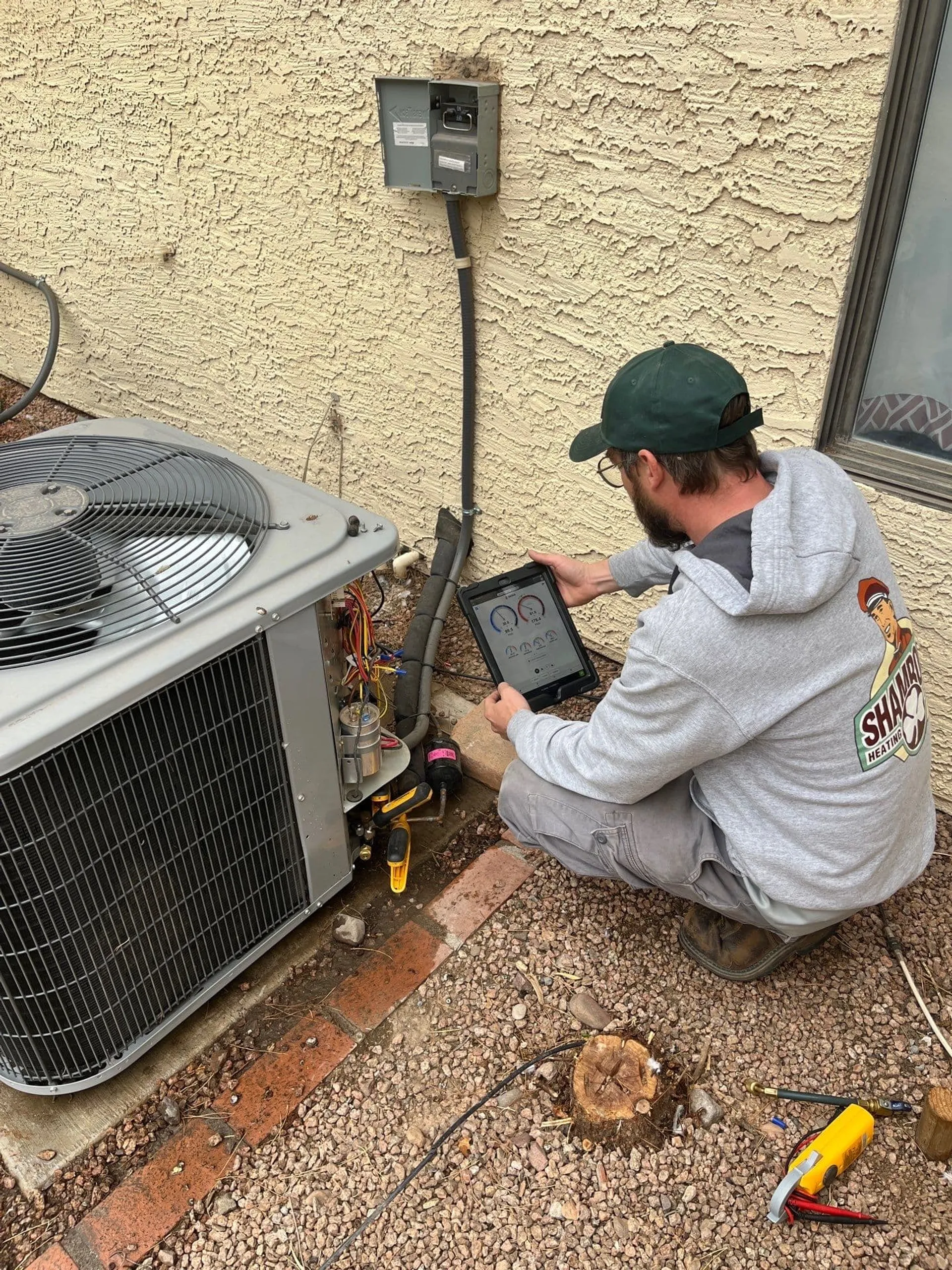
During a professional AC Tune-up, technicians clean these components, ensuring the air passing over them stays fresh and clean.
How Shamrock Can Help
At Shamrock Heating & Cooling, we understand that Arizona allergies are tough. We help families from Scottsdale to Gilbert breathe easier every day.
We don’t just swap parts; we assess your home as a system. We can measure your current air quality, inspect your ductwork for leaks, and recommend the right filtration or purification system that won’t choke your AC unit. Whether you need a simple filter upgrade or a whole-home air scrubber, we have the expertise to help.
Your home should be the one place where you can take a deep breath without worry.
Experience the difference of professional HVAC care.
Need HVAC Help? We’re Here to Help.
Schedule service with Shamrock Heating & Cooling for fast, reliable comfort.
Schedule Service