
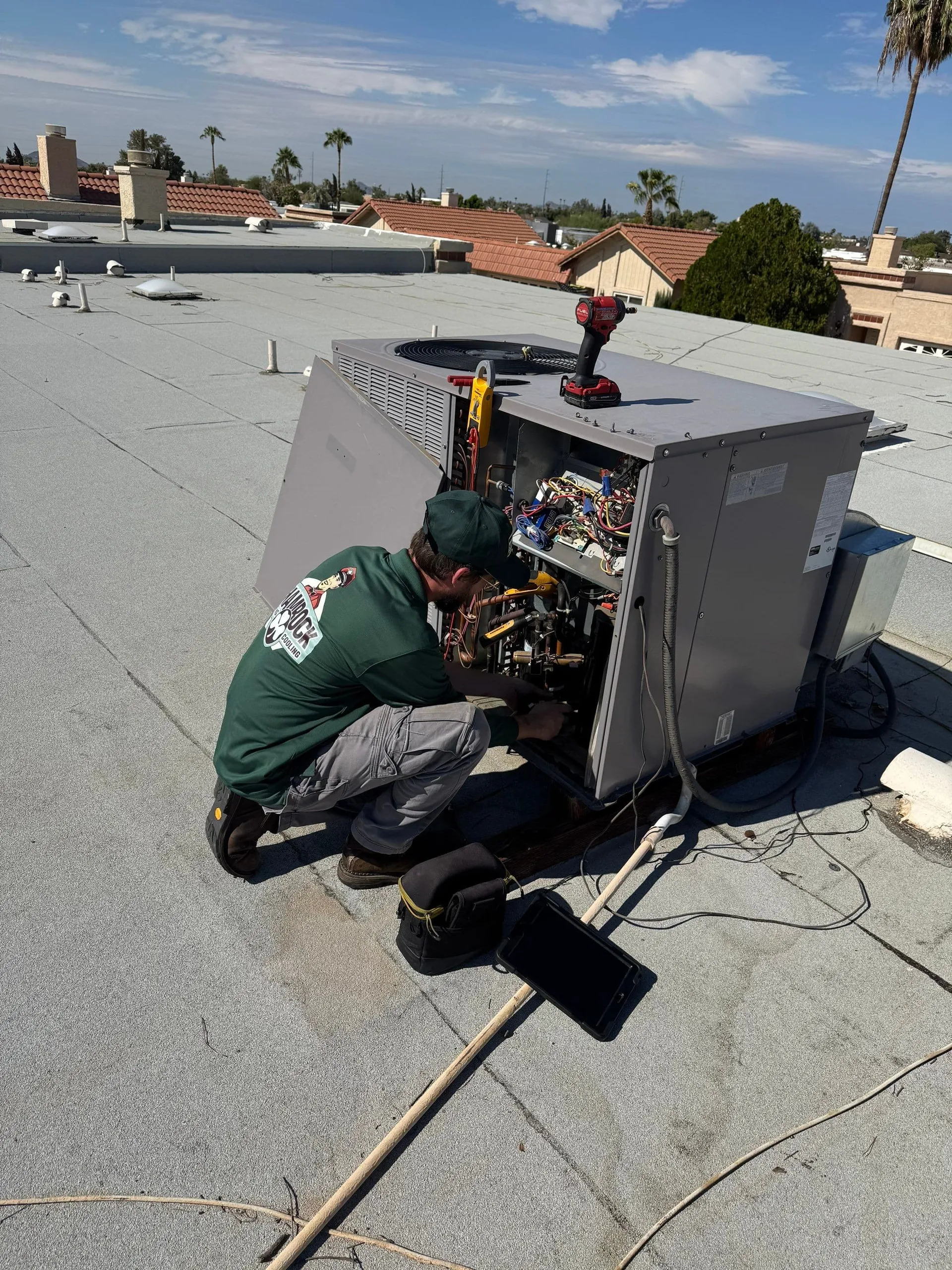
Reducing VOCs and Formaldehyde Through HVAC Filtration
New furniture and building materials in your Phoenix home release harmful gases. Learn how specialized HVAC filtration reduces VOCs and formaldehyde.
Reducing VOCs and Formaldehyde Through HVAC Filtration
There is a satisfying feeling that comes with upgrading your home—whether it’s installing new laminate flooring in the living room, buying a fresh bedroom set, or applying a coat of paint to the nursery. However, that distinct “new house smell” often signals the presence of invisible airborne chemicals known as VOCs (Volatile Organic Compounds) and formaldehyde.
In the Phoenix Valley, where we keep our windows tightly closed for months to conserve air conditioning, these chemicals can build up to concerning levels. Without proper air purification strategies, the air inside your home can actually be more polluted than the air outside. Understanding how to manage chemical filtration through your HVAC system is key to maintaining a healthy environment for your family.
What Are VOCs and Formaldehyde?
Volatile Organic Compounds are carbon-based chemicals that evaporate easily at room temperature. They are emitted by thousands of products used in modern home construction and daily life.
Formaldehyde is one of the most common and concerning VOCs. It is a colorless gas with a strong pickle-like odor, often used in the glues and resins that hold composite wood products together.
Common sources in your Chandler or Scottsdale home include:
- Pressed Wood Products: Particleboard, hardwood plywood paneling, and medium-density fiberboard (MDF) used in cabinets and furniture.
- Flooring: Laminate flooring, new carpets, and the adhesives used to install them.
- Household Products: Paints, varnishes, cleaning supplies, and air fresheners.
- Combustion: Tobacco smoke and gas stoves.
While these materials “off-gas” over time, the process can take months or even years. In a well-sealed energy-efficient home, these gases have nowhere to go.
Why Standard Filters Fall Short
Many homeowners assume that their high-quality pleated air filter is protecting them from these pollutants. While a high MERV rating is excellent for trapping dust, pollen, and pet dander, it is ineffective against gases.
Think of a standard filter like a chain-link fence. It stops a basketball (dust particle) easily, but it does nothing to stop a mosquito (gas molecule). To trap chemicals like formaldehyde, you need a different type of technology designed specifically for chemical filtration.
Solutions for Reducing Chemical Pollutants
Fortunately, modern HVAC technology offers several ways to combat these invisible intruders.
1. Activated Carbon Filtration
The most direct way to remove gases is through adsorption. Activated carbon filters contain millions of microscopic pores that trap chemical molecules as air passes through them. Upgrading to a filter that includes a carbon layer can significantly reduce odors and VOC levels.
2. Whole-Home Air Scrubbers
For more aggressive air purification, we often recommend installing an air scrubber directly into your ductwork. These devices use advanced technology, such as photocatalytic oxidation (PCO), to actively neutralize VOCs. Instead of waiting for the gas to get trapped in a filter, the scrubber sends out charged ions that break down the chemical structure of pollutants like formaldehyde, turning them into harmless water vapor and carbon dioxide.
3. Ventilation Strategies
Dilution is the solution to pollution. Bringing fresh air into the home lowers the concentration of indoor chemicals. While opening windows isn’t always practical during a 115°F Mesa summer, Energy Recovery Ventilators (ERVs) can swap stale indoor air for fresh outdoor air without losing your precious cooling.
Common Mistakes to Avoid
When trying to improve indoor air quality, avoid these common pitfalls:
- Masking Odors: Don’t try to cover up chemical smells with scented candles or plug-in air fresheners. These products release their own set of VOCs, adding to the chemical load in your air rather than reducing it.
- Ignoring Humidity: High humidity and heat can actually increase the rate at which formaldehyde off-gases from furniture. Keeping your home cool and maintaining humidity below 50% helps slow down emissions.
- Blocking Vents: Ensure all your supply and return vents are open and unobstructed. Good airflow is essential for moving pollutants to your filtration system.
How Shamrock Can Help
At Shamrock Heating & Cooling, we treat your home as a complete system. We understand that comfort isn’t just about temperature—it’s about breathing clean, healthy air.
We can help reduce the chemical load in your home through:
- Indoor Air Quality Assessments: Our Indoor Air Quality services include measuring pollutant levels to see exactly what you are breathing.
- Advanced Installations: We install and service whole-home air scrubbers and UV lights that target biological and chemical contaminants.
- System Maintenance: A clean system is an efficient system. Our AC Tune-up ensures your fans and ducts are clean, promoting optimal airflow for filtration.
If you are planning a renovation or just bought new furniture, consider scheduling an assessment to ensure your ventilation and filtration can handle the new additions. Check our deals and financing page for offers on IAQ upgrades.
Don’t let invisible gases compromise your family’s health.
Trust our expert technicians for all your heating and cooling needs.
Need HVAC Help? We’re Here to Help.
Schedule service with Shamrock Heating & Cooling for fast, reliable comfort.
Schedule Service