
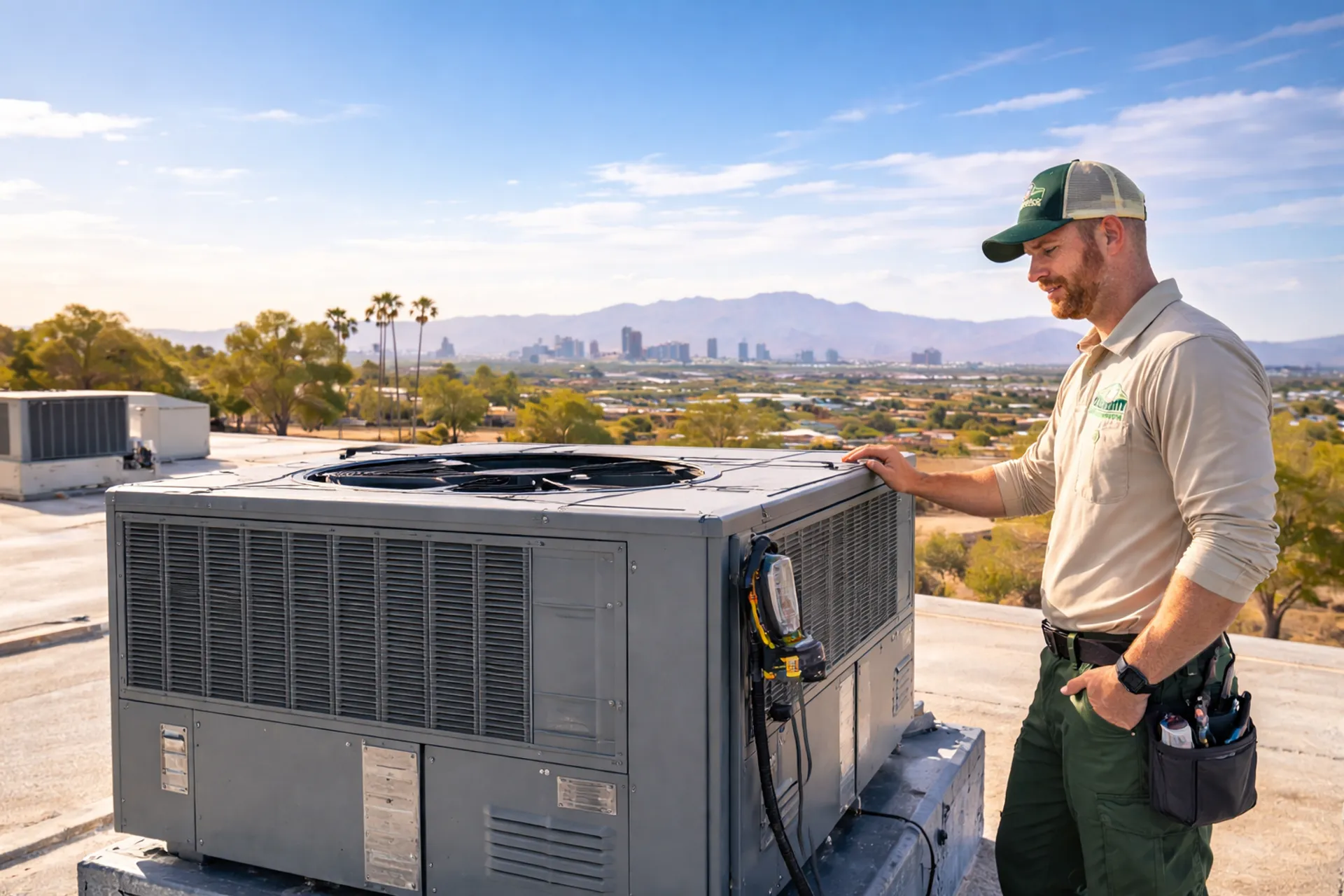
Running Your AC in Extreme Heat: Tips for 110+ Degree Days
When temperatures exceed 110°F, even the best AC systems are challenged. Learn how to optimize cooling during Phoenix extreme heat events.
Running Your AC in Extreme Heat: Tips for 110+ Degree Days
In the Phoenix Valley, we are accustomed to hot weather. Triple digits are just a part of life in Tempe, Mesa, and Scottsdale. However, there is a distinct difference between a standard 100-degree day and the blistering intensity of extreme heat when the thermometer climbs past 110°F or even 115°F.
During these heat waves, your air conditioning system faces its toughest test. Even the most robust, well-maintained units can struggle to keep up when the outdoor temperature reaches these heights. Understanding how to manage your system during these high temperature events is crucial for staying cool and preventing a mid-summer breakdown. Here is how to help your AC survive the hottest days of the year.
Understanding the “Design Temperature”
It is important to manage expectations during a heat wave. Most residential air conditioning systems are designed to maintain an indoor temperature that is about 20 to 25 degrees cooler than the outdoor air.
When it is 110°F outside, asking your AC to hold a steady 68°F is asking for the impossible. The physics of heat transfer simply work against the machine. If your unit is running non-stop and the indoor temperature creeps up to 78°F or 80°F during the late afternoon, your system isn’t necessarily broken. It is just fighting a massive thermal load.
Pushing the thermostat lower won’t make the air colder; it will only force the compressor to run without a break, increasing the risk of overheating and failure.
Strategy 1: The Art of Pre-Cooling (Supercooling)
One of the most effective strategies for summer cooling in Arizona is “supercooling.” This involves cooling your home down significantly during the morning hours when the outside temperature is lower and electricity rates are often cheaper.
- Morning Chill: Set your thermostat to 70°F or 72°F from early morning until noon. This cools down the physical structure of your home—the walls, furniture, and slab.
- Afternoon Coasting: When the peak heat hits (usually 3 PM to 7 PM), raise the thermostat to 78°F or higher. Because your home acts like a thermal battery, it will stay cool for hours without the AC having to run constantly during the hottest part of the day.
Strategy 2: Reduce the Heat Load
Your AC is working overtime to remove heat from your home. You can help it out by stopping heat from getting in and reducing the heat you generate inside.
- Close the Blinds: Solar heat gain is massive in Phoenix. Keep blinds and curtains closed, especially on south and west-facing windows. Blackout curtains can make a surprising difference.
- Skip the Oven: A 110-degree day is not the time to roast a chicken. Using the oven adds a significant heat load to the kitchen. Stick to the microwave, outdoor grill, or cold meals.
- Delay Chores: Running the dryer and dishwasher adds heat and humidity to the house. Save these tasks for early morning or late evening.
Strategy 3: Don’t Turn It Off Completely
A common mistake homeowners make is turning the AC off completely when they leave for work, thinking they are saving money.
If you let your home heat up to 90°F while you are away, your AC will have to run for hours to bring the temperature back down when you return. During extreme heat, it might never catch up. Instead, simply raise the thermostat a few degrees (to 80°F or 82°F) while you are away. This keeps the heat manageable without overworking the unit upon your return.
Strategy 4: Airflow is Critical
When the outdoor air is scorching, your system needs to breathe perfectly to function. Any restriction in airflow will cause the coils to freeze or the compressor to overheat.
- Check Your Filter: If your air filter is dirty, swap it out immediately. A clogged filter is the fastest way to kill an AC in July.
- Clear the Outdoor Unit: Ensure there are no bushes, weeds, or debris crowding your outdoor condenser unit. It needs at least two feet of clearance to disperse heat effectively.
When to Call a Pro
While some struggle is normal in extreme weather, certain signs indicate a mechanical failure rather than just a hot day.
If your system is blowing warm air, making loud grinding noises, or if the indoor temperature is matching the outdoor temperature, you need professional help. Ignoring these signs can turn a minor repair into a major AC replacement.
How Shamrock Can Help
At Shamrock Heating & Cooling, we know what it takes to keep homes cool in the Valley of the Sun. The best way to prepare for 110+ degree days is with a proactive AC Tune-up before the heat spikes.
Our technicians will check your refrigerant levels, clean your coils, and test your electrical components to ensure your system has the stamina to handle the desert summer. We serve homeowners across Phoenix, Gilbert, Chandler, and beyond, ensuring you have a sanctuary from the heat.
Don’t wait until the AC stops working to give it the attention it needs.
Let us help you maintain a comfortable home environment.
Need HVAC Help? We’re Here to Help.
Schedule service with Shamrock Heating & Cooling for fast, reliable comfort.
Schedule Service