
Signs You Need a New HVAC System: When Repair Isn't Enough
Knowing when to replace rather than repair your HVAC system can save you money in the long run. Identify the key indicators that it's time for a new system.
Signs You Need a New HVAC System: When Repair Isn’t Enough
There is a familiar sinking feeling for homeowners in the Phoenix Valley: it is a Tuesday afternoon in July, the temperature outside is 112°F, and suddenly, the house goes quiet. The hum of the air conditioner stops, and the temperature on the thermostat starts creeping up.
When your HVAC system breaks down, the immediate instinct is often to patch it up. We all want to get the cool air flowing again as quickly and cheaply as possible. However, there comes a tipping point where repairing an aging unit is no longer a wise financial decision—it becomes a money pit.
Deciding between an HVAC repair and a full HVAC replacement is one of the toughest choices a homeowner faces. Make the wrong call, and you could be throwing good money after bad. In this guide, we will walk you through the clear signs that your system has reached the end of its road and why upgrading might actually save you money in the long run.
1. The Age of Your System
In many parts of the country, air conditioners can last 20 years. But here in Arizona, our equipment faces a much tougher life. The extreme heat of the Sonoran Desert means our units run longer, harder, and under more stress than almost anywhere else.
The Magic Number: 10–15 Years
If your air conditioner or heat pump is over 10 years old and facing a major repair, you are in the “replacement zone.” In Phoenix, a system that has survived 15 years has essentially run a marathon every single day. Even if it is still running, its internal components—like the compressor and blower motor—are likely near the end of their lifespan.
If you live in an older neighborhood in Scottsdale or Tempe and are still running the original unit from the early 2000s, you are likely living on borrowed time. Planning a replacement now allows you to choose the system you want on your terms, rather than being forced into a decision during a catastrophic breakdown in the middle of a heatwave.
2. Frequent and Costly Repairs
Are you on a first-name basis with your HVAC repair technician? While we love seeing our customers, seeing us too often is a bad sign for your wallet.
There is a concept in our industry known as the “nickel and dime” effect. It starts with a capacitor one month. Then a contactor the next. Then a fan motor a few months later. Individually, these repairs might seem manageable, but they add up quickly.
The 50% Rule
A good rule of thumb is the 50% rule: If the cost of the repair is 50% or more of the value of the system (or the cost of a new one), you should replace it. For example, replacing a compressor on a 12-year-old unit is rarely worth the investment. That money is better spent as a down payment on a brand-new, reliable system with a fresh warranty.
3. Skyrocketing Energy Bills
Have your APS or SRP bills been climbing steadily, even though you haven’t changed your thermostat habits? As HVAC systems age, they lose energy efficiency.
Wear and tear on the compressor and coils means the system has to work harder and run longer to provide the same amount of cooling. An AC unit that was considered “efficient” in 2010 likely had a SEER (Seasonal Energy Efficiency Ratio) rating of 10 or 12. Today’s modern systems start at a much higher efficiency standard (SEER2).
By upgrading to a new high-efficiency system, you could see a drastic reduction in your monthly utility costs. In many cases, the monthly savings on electricity help offset the monthly payment for the new unit.
4. Uneven Temperature and Comfort Issues
Your HVAC system’s job is to keep your home comfortable in every room. If you are noticing that the living room is freezing while the bedrooms in your Gilbert or Chandler home are sweltering, your system might be losing capacity.
As components wear out, the system struggles to push air through the ductwork effectively. You might notice:
- Weak Airflow: You can barely feel the air coming out of the vents.
- Humidity Issues: The house feels sticky or clammy because the AC isn’t running long enough to remove moisture.
- Hot Spots: Certain rooms never seem to cool down.
While ductwork issues can sometimes cause this, it is often a sign that the AC unit simply doesn’t have the power it once did.
5. The R-22 (Freon) Factor
If your unit was installed before 2010, there is a high chance it uses R-22 refrigerant, commonly known as Freon. The EPA has phased out the production and import of R-22 due to environmental concerns.
What does this mean for you? If your older unit develops a refrigerant leak—which is common in aging coils due to formicary corrosion—repairing it can be astronomically expensive. The supply of R-22 is limited and dwindling, driving prices up.
Modern systems use more environmentally friendly refrigerants (like R-410A or the newer A2L refrigerants). Investing in a leak repair for an R-22 unit is almost never a good financial decision. It is generally the final nail in the coffin for an old air conditioner.
6. Excessive Noise and Smells
Air conditioners should be felt, not heard. While no system is silent, a well-functioning HVAC unit should fade into the background.
If your system is making loud banging, grinding, squealing, or rattling noises, it indicates serious mechanical trouble.
- Squealing: often implies a belt or motor bearing issue.
- Grinding: usually means a motor is failing.
- Banging: can indicate a loose or broken part inside the compressor.
Additionally, strange smells—like burning dust, electrical odors, or mustiness—can signal dangerous wiring issues or mold growth inside the unit. If the unit is old and noisy, it is often safer and quieter to replace it.
The Benefits of a System Upgrade
Replacing your HVAC system is a significant investment, but it comes with immediate benefits that go beyond just “working.”
- Peace of Mind: New systems come with manufacturer warranties (often 10 years on parts), so you won’t have to worry about surprise repair bills.
- Smart Technology: Modern systems integrate seamlessly with smart thermostats, allowing you to control your Mesa home’s climate from your phone and optimize schedules for savings.
- Incentives: You may be eligible for tax credits under the Inflation Reduction Act or rebates from local utility companies. Check our deals and financing page to see what is currently available.
Honest Assessments from Shamrock Heating & Cooling
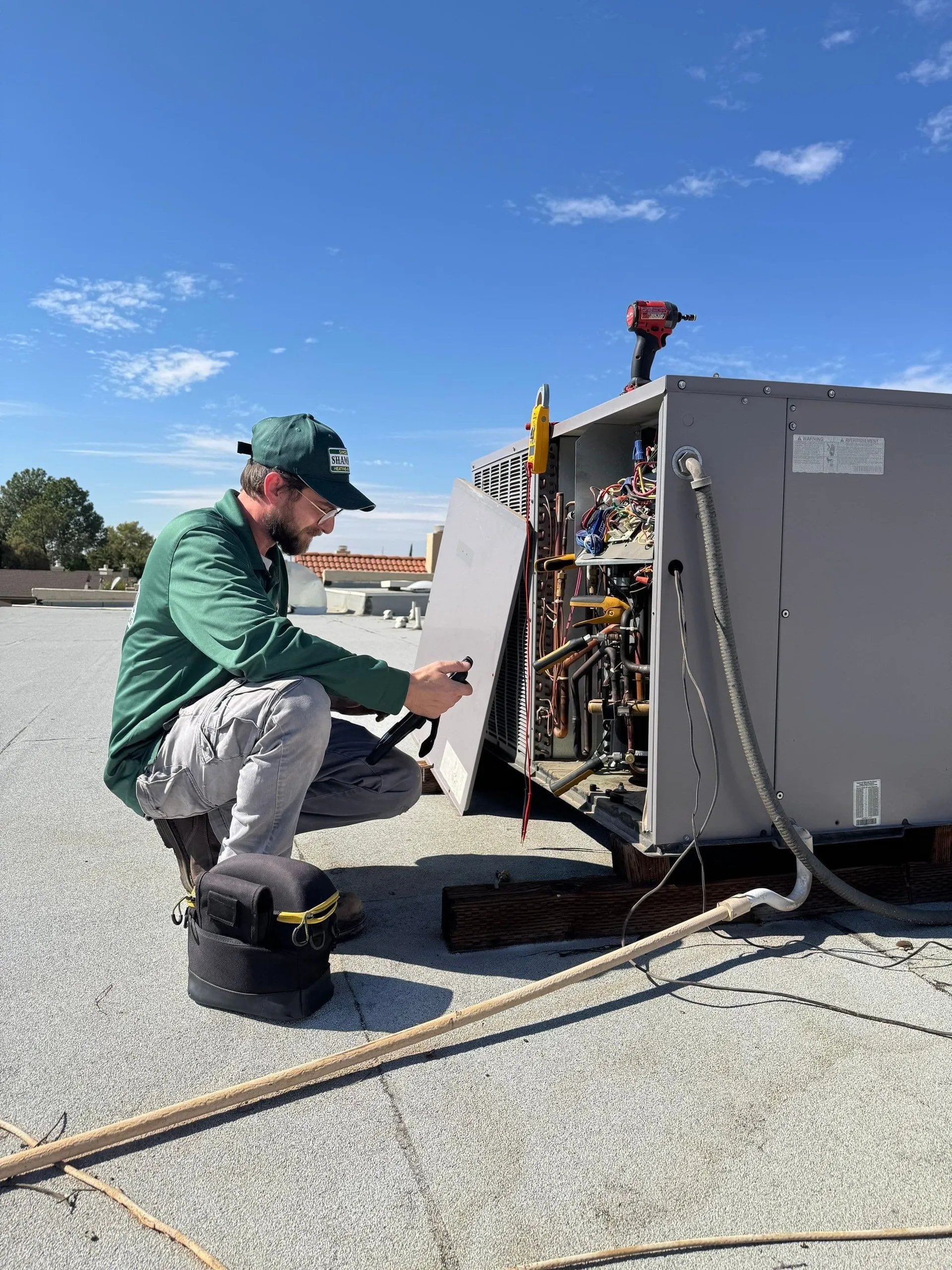
At Shamrock Heating & Cooling, we pride ourselves on being advisors, not just salespeople. We understand that no one wants to buy a new air conditioner. When we visit your home in the Phoenix Valley, we will perform a thorough evaluation.
If a repair makes sense and can extend the life of your unit safely, we will tell you. But if we see that a system upgrade is the most financially responsible path for you, we will provide a clear, transparent quote with no hidden fees. We consider your budget, your home’s layout, and your long-term plans to recommend the perfect solution.
Don’t wait for your system to fail completely on the hottest day of the year. If you are noticing these signs, let’s talk about your options.
Experience the difference of professional HVAC care.
Need HVAC Help? We’re Here to Help.
Schedule service with Shamrock Heating & Cooling for fast, reliable comfort.
Schedule Service