
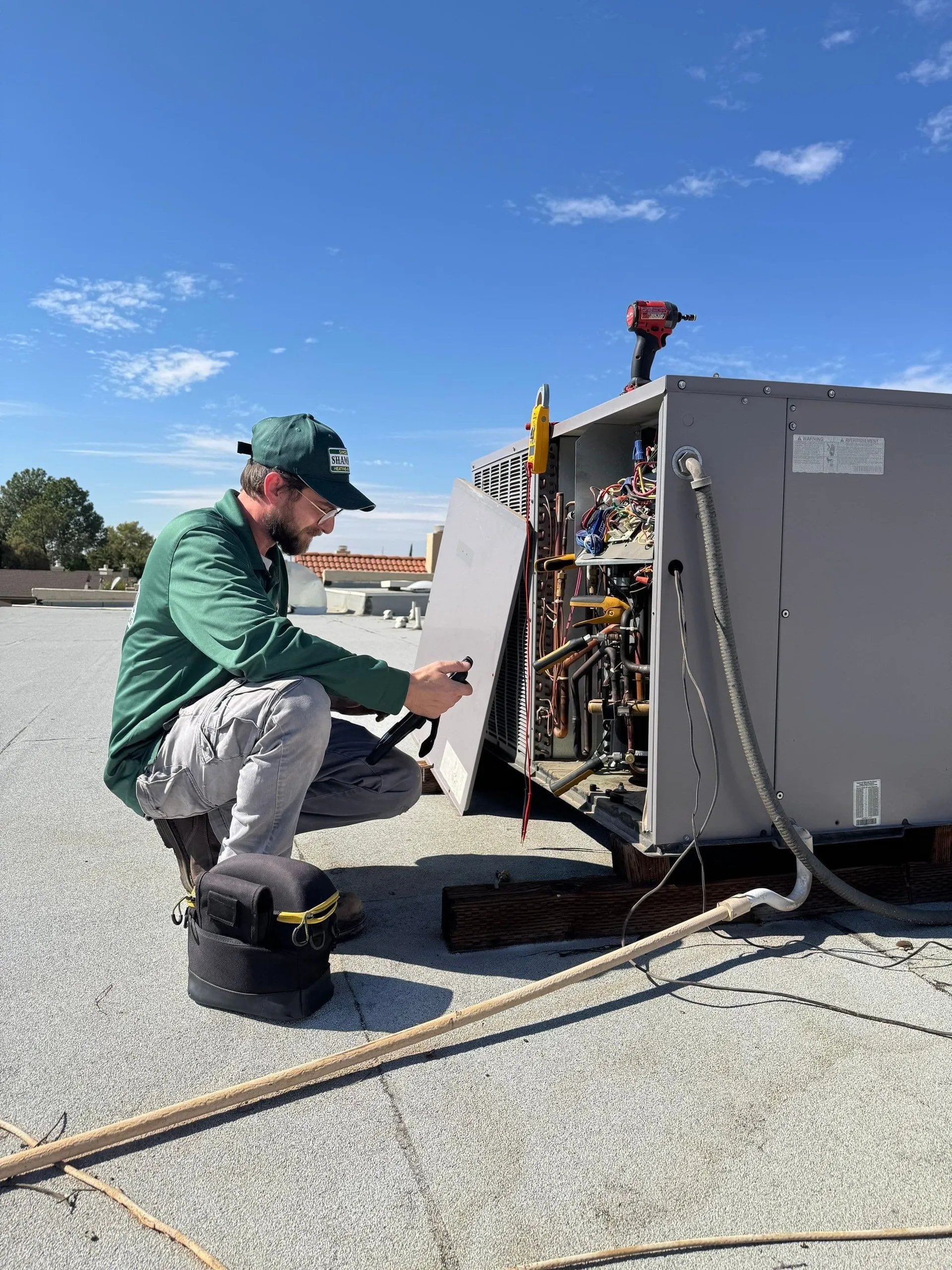
HVAC Concrete Pad Problems: Settling and Cracking
An unlevel pad stresses your equipment and leads to costly repairs. Learn why a proper foundation is critical for your outdoor AC unit in Phoenix.
HVAC Concrete Pad Problems: Settling and Cracking
When homeowners in the Phoenix Valley think about AC maintenance, they usually picture changing air filters or cleaning coils. Rarely do we look down at the ground. Yet, the concrete pad (or composite slab) that your outdoor air conditioning unit sits on is the literal foundation of your home’s comfort.
Over time, the ground beneath your equipment pad can shift, erode, or settle. While a slightly tilted AC unit might seem like a cosmetic annoyance, it can actually cause severe mechanical stress and lead to expensive failures. Ensuring your system remains level and supported is a crucial, though often overlooked, aspect of HVAC care in Arizona.
Why a Level Foundation Matters
Your outdoor condenser is a precision machine containing a compressor, a fan motor, and delicate copper tubing. It is designed to operate on a perfectly flat plane. When the foundation shifts, it throws the internal mechanics off balance.
Compressor Lubrication
The compressor is the heart of your HVAC system. Inside, it relies on oil to lubricate bearings and moving parts. This oil sits in a “sump” at the bottom of the compressor. If the unit tilts too far to one side due to settling, the oil may pool away from the pickup tube. This starves the compressor of lubrication, leading to overheating, friction, and eventually, a seized compressor—a major repair often requiring a full AC replacement.
Fan Balance
The large fan on top of your unit spins at high speeds. Just like a washing machine that thumps when the load is unbalanced, an AC unit on a tilt can cause the fan to wobble. This creates excessive vibration, noise, and wear on the fan motor bearings.
The Causes of Settling in Phoenix
Why does the ground move under your AC unit? In neighborhoods like Chandler, Gilbert, and Scottsdale, several factors contribute to pad movement:
- Monsoon Erosion: Our intense summer storms dump massive amounts of water in a short time. If the grading around your home isn’t perfect, water can pool around the equipment pad, washing away the soil or sand base beneath it.
- Soil Expansion: Arizona soil often has high clay content. It swells when wet and shrinks when dry. This constant cycle can cause the ground to heave and sink, cracking concrete pads or tilting composite ones.
- Vibration: Over years of operation, the subtle vibration of the AC unit itself can cause it to “dig in” to soft soil if not properly compacted during installation.
The Hidden Danger: Stressed Copper Lines
The most immediate danger of a sinking pad is the strain it puts on your refrigerant lines.
Your outdoor unit is connected to your house by two copper pipes (the line set) and electrical conduit. These lines are rigid. If your AC unit sinks two or three inches into the ground, it pulls down on these pipes. Since the pipes are anchored to the wall of your house, they can’t move.
This tension creates stress points at the connection joints. Eventually, the copper will kink or snap, causing a massive refrigerant leak. A sudden loss of refrigerant not only stops your cooling but can also damage the environment and your equipment.
Solutions for a Sinking Pad
If you notice your unit is leaning, simply shoving a rock under one corner isn’t the solution. Here is how proper leveling should be approached:
1. Re-leveling the Base
For minor settling, the unit can be carefully lifted (taking great care not to kink the attached lines), and the ground underneath can be built up with crushed gravel or a stable base material. This restores support across the entire bottom of the pad, not just at the corners.
2. Pad Replacement
Old concrete pads often crack and crumble. Modern installations frequently use composite pads—lightweight, durable slabs made of reinforced plastic or concrete-foam hybrids. These are resistant to cracking and weather damage. If your old concrete pad is falling apart, swapping it for a new composite equipment pad during a system replacement is a smart upgrade.
3. Drainage Correction
Fixing the pad won’t help if the water keeps washing the dirt away. We often recommend adjusting the landscaping or adding gutters nearby to ensure rainwater is diverted away from the AC unit.
Common Mistakes to Avoid
- Using Wood Shims: Never use wood to level an AC unit. Termites love it, and it will eventually rot, leaving the unit unstable again.
- Ignoring the Tilt: Many homeowners ignore a “slight” lean. However, tolerances are tight. A tilt of just a few degrees can affect the physics of the refrigerant cycle.
- DIY Lifting: Trying to pry up a heavy condenser unit with a crowbar can easily puncture the coils or snap the electrical whip. This is a job for professionals who know how to manipulate the equipment safely.
How Shamrock Can Help
At Shamrock Heating & Cooling, we look at the whole picture—including what’s under the unit. Whether you need a simple AC repair or a full system installation, we ensure the foundation is solid.
- Inspection: During our routine AC Tune-up, we check the level of your condenser. If we see it starting to settle, we will alert you before it stresses the copper lines.
- Proper Installation: When we perform an AC installation, we prepare the ground properly. We ensure the soil is compacted and the new pad is set on a bed of gravel if necessary to prevent future shifting.
- Line Protection: We inspect the copper lines for signs of tension or wear caused by previous settling, repairing leaks before they become catastrophic.
Your air conditioner works hard enough fighting the Arizona heat; don’t make it fight gravity, too. A level pad means a quieter, longer-lasting system. Check our deals and financing for specials on our maintenance services.
Schedule your HVAC service today to keep your system running smoothly year-round.
Need HVAC Help? We’re Here to Help.
Schedule service with Shamrock Heating & Cooling for fast, reliable comfort.
Schedule Service